You’re holding a thick, bone-in ribeye that promises a smoky crust and a juicy center. Season it simply, let it warm up a bit, then hit it with a hot sear and gentle finishing heat for medium-rare magic.
We’ll walk you through the exact steps to make a Montana Cowboy Steak taste like Big Sky country.
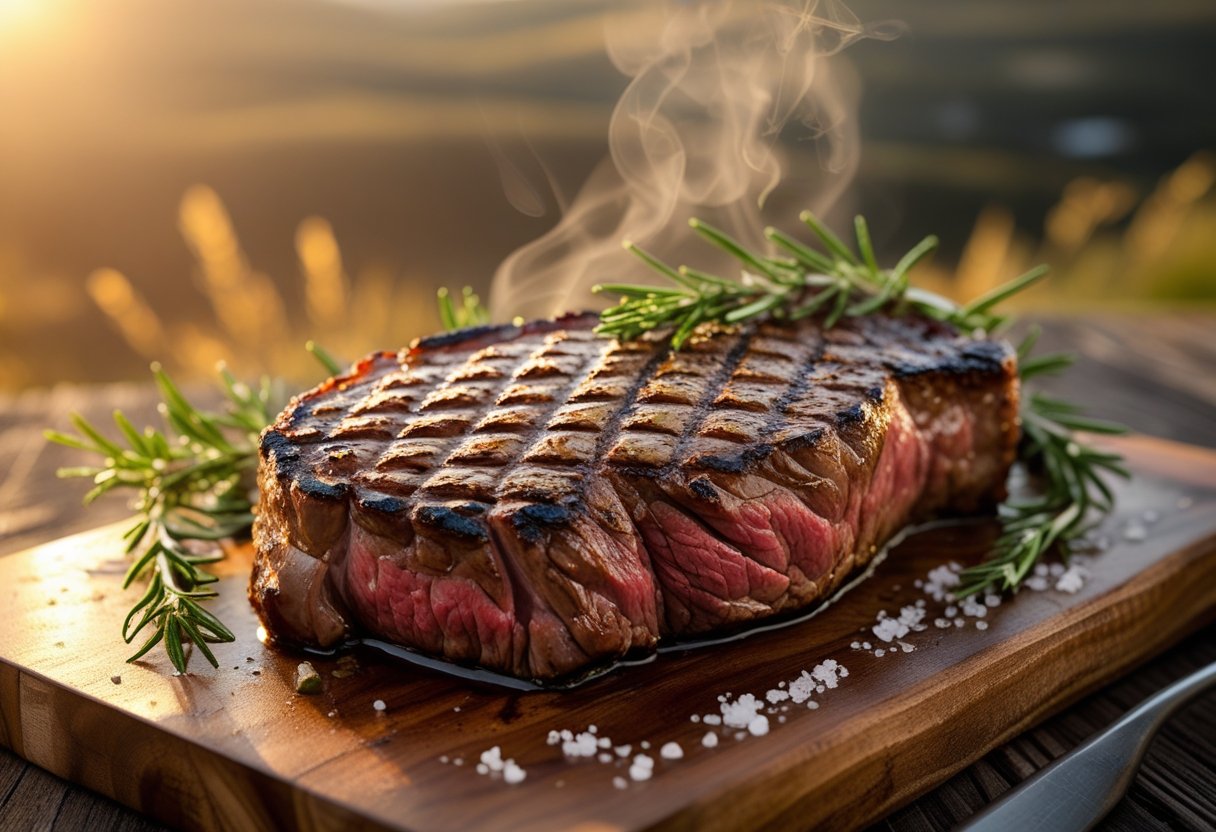
Picture the sizzle as the steak hits the grill, and the aroma of butter, garlic, and smoke swirling with that natural beef flavor. We’ll cover how to pick the right cut, set up two heat zones, use a thermometer, and rest the steak so every slice stays juicy and tender.
Key Takeaways
- Grab a thick, well-marbled bone-in ribeye and keep the seasoning simple.
- Sear over high heat, then finish over indirect heat until you hit your target temp.
- Rest the steak before slicing to lock in all those glorious juices.
Montana Cowboy Steak Fundamentals
Let’s talk about the cut, how to pick it, and how the bone and fat affect flavor and cooking. These basics set you up for grilling a thick, bone-in ribeye the Montana way.
What Is a Cowboy Ribeye and Its Big Sky Heritage
A cowboy ribeye is a thick-cut, bone-in ribeye with the rib bone frenched and left long for showmanship and heat transfer. These steaks are usually 2–3 inches thick and weigh 1.5–3 pounds—perfect for sharing and for slow, high-heat cooking.
The cut comes from the rib section, famous for rich marbling and beefy flavor. Montana’s ranching roots mean cattle raised on open range, which makes for beef that loves bold grilling over coals or hardwood.
A tomahawk steak is basically a cowboy ribeye’s dramatic cousin, rocking an even longer bone. Both come from the same ribeye muscle; the main difference is just the bone’s length (and maybe how much you want to impress your guests).
Choosing the Ideal Thick-Cut Ribeye Steak
We look for steaks by thickness, weight, and visible fat. Go for 2–3 inches thick and at least 1.25 pounds per serving if you’re sharing.
For a crowd, grab a 2–3 pound cowboy steak so the center cooks evenly without drying out. Check for thin, even white streaks of marbling—those mean tenderness and flavor.
USDA Choice or Prime are your best bets; Prime is the juiciest, but Choice is still solid. Grass-fed or grain-finished? Grain-finished usually offers more marbling and a richer mouthfeel.
Ask your butcher for a ribeye center-cut with the bone frenched. Want a showstopper? Request a tomahawk bone. Watching your portions? Ask for a shorter, “cowboy length” bone.
Bone-In vs. Boneless: What Steak Cut Is Best
Bone-in is our go-to for flavor and even cooking. The bone holds heat and slows down cooking in the center—super helpful for thick cuts.
Boneless ribeye sears faster and is easier to carve, so it’s great for quick weeknight dinners. But for Montana-style cowboy steak, the bone brings both drama and flavor.
Cooking method matters: reverse sear and indirect-then-direct grilling shine with bone-in. If you’re going sous-vide, boneless is easier to vacuum-seal and finish in a pan.
Understanding Marbling and Ribeye Quality
Marbling is the white intramuscular fat that makes steak juicy and flavorful. The more marbling, the better the taste and tenderness.
USDA Prime has the most marbling, then Choice, then Select. Prime is perfect for special occasions and thick cowboy steaks because it stays moist even when aiming for medium-rare.
Look for even fat distribution—don’t be fooled by a giant outer fat cap. When shopping, check for labels like “bone-in ribeye,” “cowboy steak,” “tomahawk,” or “prime rib” to make sure you’re getting the real deal.
Grilling Montana Cowboy Steak to Perfection
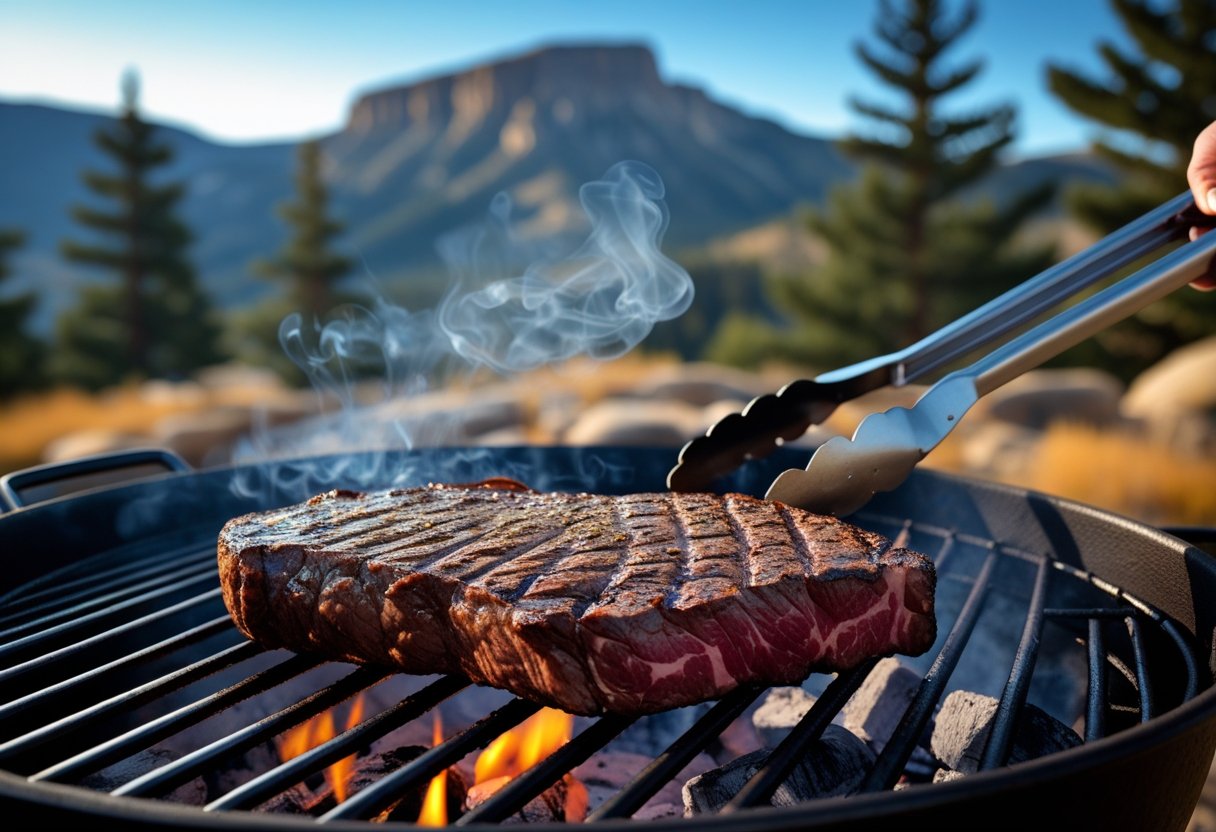
Our goal: deep crust, even pink center, and bold beefy flavor. Here’s how to season, set up your grill, reverse sear, check doneness, and slice for steakhouse-worthy results.
Preparation: Seasoning and Bringing Steak to Room Temperature
Pat the ribeye dry with paper towels—no one wants a steamed steak. For a 2–2.5 inch cowboy steak, salt generously with kosher salt at least 45 minutes before cooking, or even overnight in the fridge if you’re planning ahead.
Grind fresh black pepper just before searing to avoid burning it. Rub a thin coat of neutral oil on the steak so the seasoning sticks and you get a killer crust.
If you’re using compound butter later, keep herbs and garlic ready but don’t slather them on before the sear. Let the steak come to room temperature for 30–60 minutes—this helps it cook evenly and keeps your steak from being cold in the middle.
Grill Setup: Charcoal, Gas, and Wood Fire Techniques
For charcoal, bank coals to one side for two-zone cooking: hot direct heat for searing, cooler indirect heat for finishing. Place a drip pan under the indirect zone to avoid flare-ups.
On a gas grill, crank one burner to high and keep another low for your sear and finish zones. Preheat for 10–15 minutes so the grate is blazing hot.
For a wood fire, use dense hardwood like oak or hickory. Build the fire to one side, let the flames die down to embers, and sear over the hot side, then finish on the cooler side.
Always use long tongs and a sturdy grill grate. Keep a spray bottle handy for flare-ups. The goal: a hot sear surface and a cooler finishing zone for perfect control.
How to Reverse Sear a Thick-Cut Ribeye Steak
Reverse searing is the secret weapon for medium-rare perfection and that Instagram-worthy crust. Start by cooking the steak slowly over indirect heat (or in a 225–275°F oven) until it’s about 10–15°F below your target temp—usually 115–120°F for a final 125–130°F medium-rare.
Let the steak’s surface dry for a few minutes while you preheat a cast iron skillet or the hot side of the grill. Add a little high-smoke-point oil and sear the steak 1–2 minutes per side until a deep crust forms.
Don’t forget the edges and fat cap—give them a quick sear too. Use an instant-read thermometer for accuracy. The reverse sear method gives you a uniformly pink middle and a crust that’ll make you proud.
How to Check Steak Doneness and Resting Tips
Trust your instant-read meat thermometer—your finger isn’t magic. For medium-rare, pull the steak at 125–130°F; for medium, aim for 135–140°F.
Stick the thermometer into the thickest part, steering clear of the bone. Remember, the steak keeps cooking while it rests—expect a 5–10°F rise.
Tent loosely with foil and rest on a cutting board for 8–12 minutes (for a 2–2.5 inch ribeye). This lets juices redistribute, so your steak doesn’t weep all over the plate.
If you’re in a rush, rest at least 5 minutes. For ultra-precise slices, double-check the temp after resting.
Serving and Slicing Big Sky Style
Slice against the grain into 1/4–1/2 inch strips for maximum tenderness. Leave the bone whole for dramatic presentation, and carve the meat off in long strokes.
Fan out the slices on a warm platter and top with a pat of compound butter to melt over the steak. Pair with sides that can handle the beefy goodness—grilled veggies, a baked potato, or creamy mushroom sauce.
Label doneness if you’re serving a crowd. For a steak recipe that lets the beef shine, keep it simple: coarse salt, fresh pepper, and maybe some herb butter.
For more grill tips, check out this guide on how to grill a cowboy steak on a gas grill (https://grillitbetter.com/how-to-grill-cowboy-steak-on-gas-grill/).
Frequently Asked Questions
We get a lot of questions about cowboy steaks: what makes them different, the best grill technique, target temps, oven methods, and how they stack up against other cuts.
What is the difference between a cowboy steak and a ribeye?
A cowboy steak is a thick, bone-in ribeye with the rib bone “frenched” and usually cut 2–2.5 inches thick.
A standard ribeye can be boneless or bone-in and is often thinner; the cowboy’s bone and thickness change cooking time and presentation.
How should a cowboy steak be cooked on the grill for the best flavor?
Use a two-zone fire: high heat for a 3–5 minute sear per side, then finish over indirect heat. Let the steak rest at room temperature 30–60 minutes before grilling and keep seasoning simple for bold, beefy flavor.
What internal temperature is ideal for a perfectly grilled cowboy steak?
Shoot for 125–130°F for medium-rare, 135°F for medium, and 120°F for rare when pulling off the heat. Carryover cooking will bump it up another 5–10°F as it rests.
Can you provide tips for cooking a thick ribeye steak in the oven?
Sear the steak in a hot cast-iron pan to build a crust, then finish in a 375°F oven until you hit your target temp. Use a meat thermometer and let the steak rest 5–10 minutes before slicing.
What cooking time is required for a cowboy steak to ensure it is properly done?
Cooking time depends on thickness and grill heat. For a 2–2.5 inch steak, expect 12–20 minutes total after searing and finishing over indirect heat or in the oven.
Always trust your thermometer—time is a guideline, not a rule!
Is a cowboy ribeye considered a superior cut compared to other steaks?
We call it premium because it comes from the rib section, which means heavy marbling and rich flavor.
Is it “superior”? That depends on your taste buds and the occasion.
Its massive size and dramatic presentation make it a showstopper for special meals.
Other cuts might be better if you prefer something leaner or want dinner on the table before you grow a beard.