You’ll recognize frog eye salad the moment you taste its sweet, creamy mix of tiny pasta, fruit, and marshmallows. It’s a retro Utah potluck staple reborn with fresher ingredients and smarter technique.
We’ll show you how to make the classic version and how to update it so it feels lighter, fresher, and totally worth bringing to any modern gathering. Get ready for clear steps, practical tips, and a few easy twists that keep the comfort but cut the cloying sweetness.
You’ll learn where the quirky name comes from, why this dish stuck to community tables in the Mountain West, and which simple swaps lift the flavor without losing the nostalgia. Expect a dash of fun and a sprinkle of nostalgia—no frog eyes required.
Key Takeaways
- We explain the salad’s roots and why it became a potluck favorite.
- We give a straightforward recipe plus modern ingredient swaps.
- We answer common questions so you can make it confidently.
Frog Eye Salad Origins and Retro Tradition
Let’s trace how a tiny pasta dessert became a potluck legend. Why did it stick in Utah and Mormon gatherings? How does it fit with other midcentury dessert salads?
The dish uses acini di pepe pasta, canned fruit, whipped topping, and often marshmallows or pudding. It’s weirdly wonderful, and somehow it works.
What Is Frog Eye Salad and Its Place in Potluck Culture
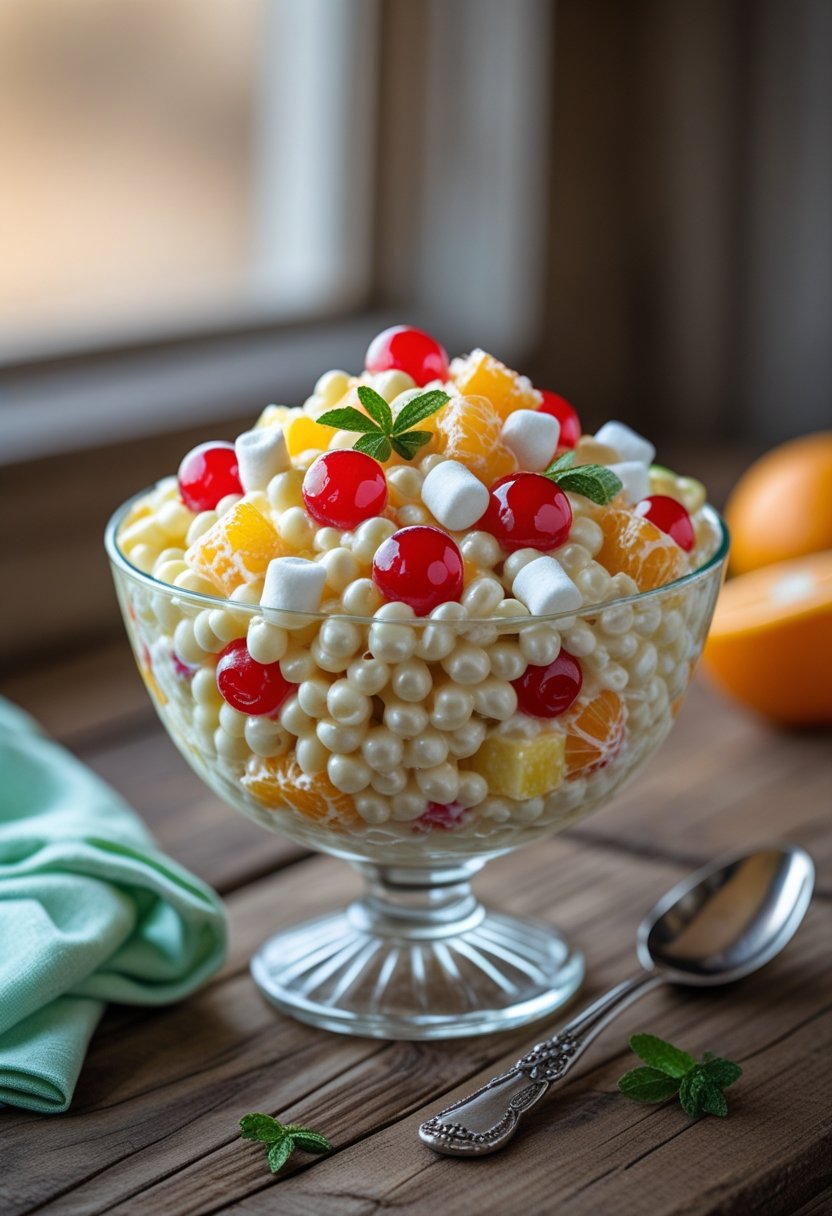
Frog eye salad is a sweet dessert salad built on tiny round acini de pepe pasta. The small pasta pearls give the salad its name and a chewy texture that contrasts with whipped topping, canned pineapple, and mini marshmallows.
It’s served as both a side and a dessert at big gatherings because one bowl feeds a crowd. It travels well, keeps in the fridge for days, and gets softer and sweeter as it chills—traits that make it a potluck MVP.
Cousins at the table include ambrosia salad, Watergate salad, and even sweet macaroni salad or strawberry pretzel salad. All use shelf-stable ingredients and simple assembly, which made them favorites in community cookbooks and food-blogger roundups.
Utah Roots and Mormon Community Legacy
Frog eye salad has its strongest roots in Utah and the Rocky Mountain West. Church potlucks helped amplify recipes from community cookbooks.
Mormon ward gatherings, funerals, and holiday feasts often featured the salad. This helped it spread through social networks and cookbook pages.
Many household recipes trace back to Creamette and other pasta promotions from the 1960s–70s, which listed acini di pepe-based ideas. The rise of convenience foods—instant pudding, Cool Whip, canned fruit—made the salad easy for home cooks to adopt and pass down.
Food bloggers and local cooks still write about family versions, noting small changes—maraschino cherries, coconut, or a custard base—inherited across generations. The result? A tight link between food, memory, and community identity in the region.
Retro Dessert Salads: From Ambrosia to Modern Classics
Frog eye salad sits among retro dessert salads like ambrosia and Watergate salad. These dishes share a pattern: simple assembly, sweet flavors, and long fridge life.
They reflect a midcentury shift toward packaged ingredients in home cooking. We compare acini de pepe to orzo or couscous in texture, but those swaps change the classic look and mouthfeel.
The tiny pasta originally evoked “frog eyes,” unlike the small pearls in Italian wedding soup or savory macaroni dishes. Bakers and bloggers today tweak the base—using Greek yogurt, fresh fruit, or lighter toppings—to update the salad.
Community cookbooks and food bloggers keep the recipes alive and document fun variations for modern palates.
Recipe and Modern Innovations
We focus on the core recipe: tiny acini de pepe pasta, a sweet custard or pudding, canned fruit, marshmallows, and whipped topping. Then we show you smart swaps and fresh ideas to modernize texture and flavor.
Essential Frog Eye Salad Ingredients
Start with acini de pepe (tiny round pasta) as the base. It gives the salad its signature “pearl” look.
Use 16 oz cooked, drained, and rinsed pasta for a 12‑serving bowl. For the custard, choose between a cooked homemade egg custard made from pineapple juice, eggs, sugar, cornstarch, and vanilla, or quick instant vanilla pudding mixed with pineapple juice for an egg‑free shortcut.
Fruit and mix‑ins: two 20‑oz cans pineapple tidbits (reserve juice), two 15‑oz cans canned mandarin oranges (well drained), 1–1½ cups mini marshmallows, and ½ cup sweetened shredded coconut. For the topping, fold in 8 oz whipped topping (Cool Whip) or 1½ cups fresh whipped cream (whip heavy cream to stiff peaks). Optional: maraschino cherries for garnish.
Pantry items: ¾ cup granulated sugar (for custard), 2 tbsp cornstarch, 1 tsp vanilla, pinch of salt. These keep texture balanced and prevent blandness.
Step-by-Step Preparation Guide
Make the custard first. Combine reserved pineapple juice, eggs (2 whole + 1 yolk) or instant pudding mix, sugar, cornstarch, and vanilla in a saucepan.
Cook over medium-low heat, stirring constantly, until the mixture thickens and coats the back of a spoon. Cool to room temperature.
Cook acini de pepe to al dente, drain, rinse under cold water, and cool completely. Cold pasta prevents the custard from thinning.
Fold chilled custard with whipped topping until smooth. Gently add pasta, pineapple tidbits, drained mandarin oranges, mini marshmallows, and shredded coconut.
Stir gently to keep marshmallows intact. Chill at least 4 hours or preferably overnight to let flavors meld and pasta absorb custard.
Before serving, adjust texture with extra whipped topping if dry, or a splash of pineapple juice if too thick. Top with toasted coconut or maraschino cherries for presentation.
Modern Variations and Creative Additions
Keep the classic spine but alter small parts for modern appeal. Swap instant vanilla pudding for coconut cream‑based pudding to boost tropical flavor.
Use fresh pineapple plus added pineapple juice if you prefer fresh fruit, but be careful—fresh pineapple enzymes can change texture over time. Add toasted sweetened shredded coconut for crunch, or fold in crushed pineapple instead of tidbits for a softer bite.
For color and tartness, stir in 1–2 teaspoons lemon juice. Health-conscious swaps: use reduced‑sugar pudding, light whipped topping, or a yogurt‑based fold (thick Greek yogurt mixed with a little honey) for tang.
For a nutty note, sprinkle chopped macadamias or slivered almonds on top at service time. Flavor twists: fold in a small amount of citrus zest, or swap mandarins for fresh segments.
For a boozy adult version, macerate fruit briefly in a tablespoon of rum or triple sec. You’re welcome.
Serving, Storage, and Make-Ahead Tips
Serve chilled in a clear bowl to show off those colorful layers. Chill overnight for best texture; the pasta softens and the flavors meld.
Add any garnish—maraschino cherries, extra mini marshmallows, or toasted coconut—just before serving. Store leftovers in an airtight container in the refrigerator for up to 3 days.
Expect the pasta to absorb more custard over time and soften; refresh texture with a little extra whipped topping or a splash of juice before serving. Avoid freezing—custard, whipped topping, and marshmallows do not enjoy the deep freeze.
If you need to make ahead for a party, prepare the custard and pasta a day ahead, keep fruit and marshmallows separate, then assemble on the event day for best texture.
Frequently Asked Questions
What are the essential ingredients for a traditional frog eye salad?
Traditional recipes use acini di pepe pasta, canned pineapple tidbits, and canned mandarin oranges.
A creamy vanilla custard or pudding binds the mix, and whipped topping, mini marshmallows, and shredded coconut add texture and sweetness.
How can you give frog eye salad a contemporary twist for modern potlucks?
Swap plain canned fruit for fresh or lightly macerated fruit to reduce syrupy sweetness.
Replace Cool Whip with stabilized whipped cream or yogurt-based dressing to improve texture and flavor.
Toast coconut, add chopped nuts for crunch, or fold in fresh berries for color.
For a lighter version, use low-sugar pudding mix and reduce marshmallows.
What is the origin of frog eye salad?
The salad emerged in mid-20th-century American potluck culture and uses convenience products popular then.
One early printed appearance appears in community and church cookbooks from the late 20th century.
Manufacturers also promoted recipes using acini di pepe pasta, which likely helped spread the dish in the Rocky Mountain and Midwest regions. See the dish’s role in regional potlucks for more detail from Food & Wine.
How does frog eye salad differ from ambrosia?
Frog eye salad centers on tiny pasta pearls (acini di pepe) in a custard, while ambrosia focuses on fresh or canned fruit mixed with whipped cream.
Ambrosia often includes marshmallows and coconut too, but it lacks the pasta element that defines frog eye salad.
Texture is the main difference: frog eye salad has soft, chewy pasta beads throughout, giving it a pudding-like body. Ambrosia stays fruit-forward and chunkier.
Can frog eye salad be made using instant pudding for convenience?
Yes. Instant vanilla pudding mix can replace cooked custard to save time.
Use slightly less milk than the pudding package suggests to keep the mixture thick enough to hold fruit and pasta.
Chill the salad for several hours so the pasta absorbs flavor and the pudding firms up. This step improves texture and melds the flavors.
Is frog eye salad specifically associated with Utah or the Mormon culture?
Frog eye salad has strong ties to Utah and to LDS church potlucks. It became a recurring dish at gatherings and holidays.
You’ll also find the recipe popping up across the Midwest and Rocky Mountain states, and in many community cookbooks. So, it’s definitely a regional favorite—not an exclusive club!