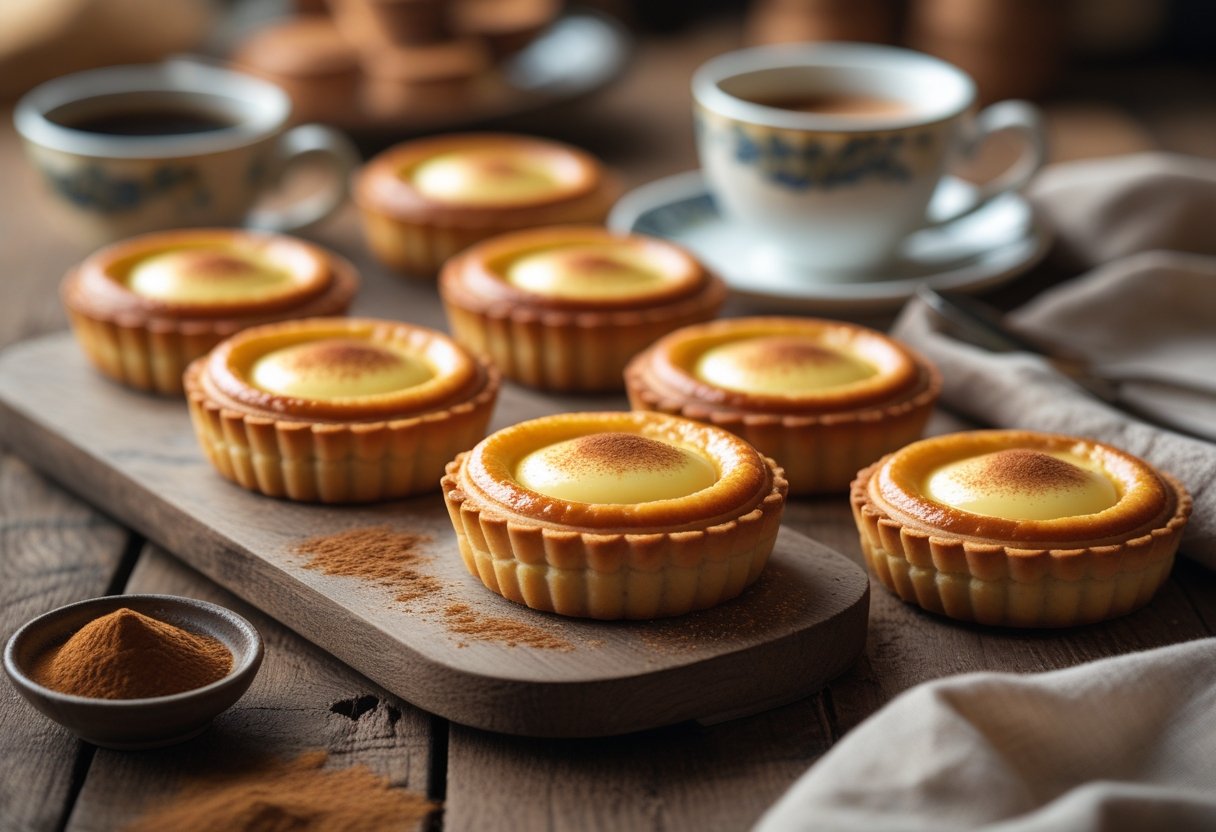
Pastéis de Nata are a well-known Portuguese dessert that brings together flaky pastry and creamy egg custard in a small tart. These Portuguese custard tarts are beloved for their crisp crust and smooth filling, making them a staple in Portugal and beyond.
They have a long history, dating back to 18th-century monasteries where leftover egg yolks were used to create sweet treats.
The original recipe was carefully guarded and remains a secret today. Many enjoy making their own versions at home.
The perfect pastel de nata balances a crunchy, layered pastry with a slightly caramelized custard on top. It’s a dessert that pairs wonderfully with coffee and is often sprinkled with cinnamon for added flavor.
Key Takeaways
- Pastéis de nata are prized for their creamy custard and flaky crust.
- Their recipe dates back to Portuguese monasteries in the 18th century.
- Authentic tarts often have a caramelized top and a light dusting of cinnamon.
History, Origins, and Hallmarks
Pastéis de nata are more than just a popular Portuguese dessert; they carry a rich history tied to religious traditions. These tarts have become a symbol of Portugal’s culinary heritage.
Their unique recipe and name reflect both their humble beginnings and their rise as famous Portuguese custard tarts enjoyed worldwide.
Origins at Jerónimos Monastery
The story of pastéis de nata begins at the Jerónimos Monastery in Lisbon during the 18th century. Monks used large amounts of egg whites to starch their robes, leaving many leftover egg yolks.
To avoid waste, the monks created a creamy egg custard tart using these yolks. After the monastery closed in the early 19th century, the recipe was sold to a nearby sugar refinery.
This marked the start of pastéis de nata as a commercial product. Today, Jerónimos Monastery is a UNESCO World Heritage Site and a key location for understanding the origins of this pastry.
Cultural Significance in Portugal
Pastéis de nata hold a special place in Portuguese culture. They are not only a dessert but also a part of daily life and celebrations.
You’ll find them in local bakeries where people enjoy them fresh with a sprinkle of cinnamon. They represent Portuguese tradition and the country’s history of adapting recipes from monastic life.
The popularity of these custard tarts has spread beyond Portugal’s borders, especially to former colonies. They serve as a culinary ambassador for Portugal, showcasing the country’s rich flavors and baking skills.
Traditional and Modern Terminology
The singular term pastel de nata means “cream pastry,” while the plural is pastéis de nata. This naming reflects the core ingredients—the rich custard filling inside a flaky pastry shell.
Today, the pastry is often called a Portuguese custard tart to help non-Portuguese speakers understand what it is. Despite modern variations and global popularity, many still prefer the original recipes tied to its monastic beginnings.
For more on the detailed history, visit the page on the history of Pastel de Nata.
What Makes a Perfect Pastel de Nata
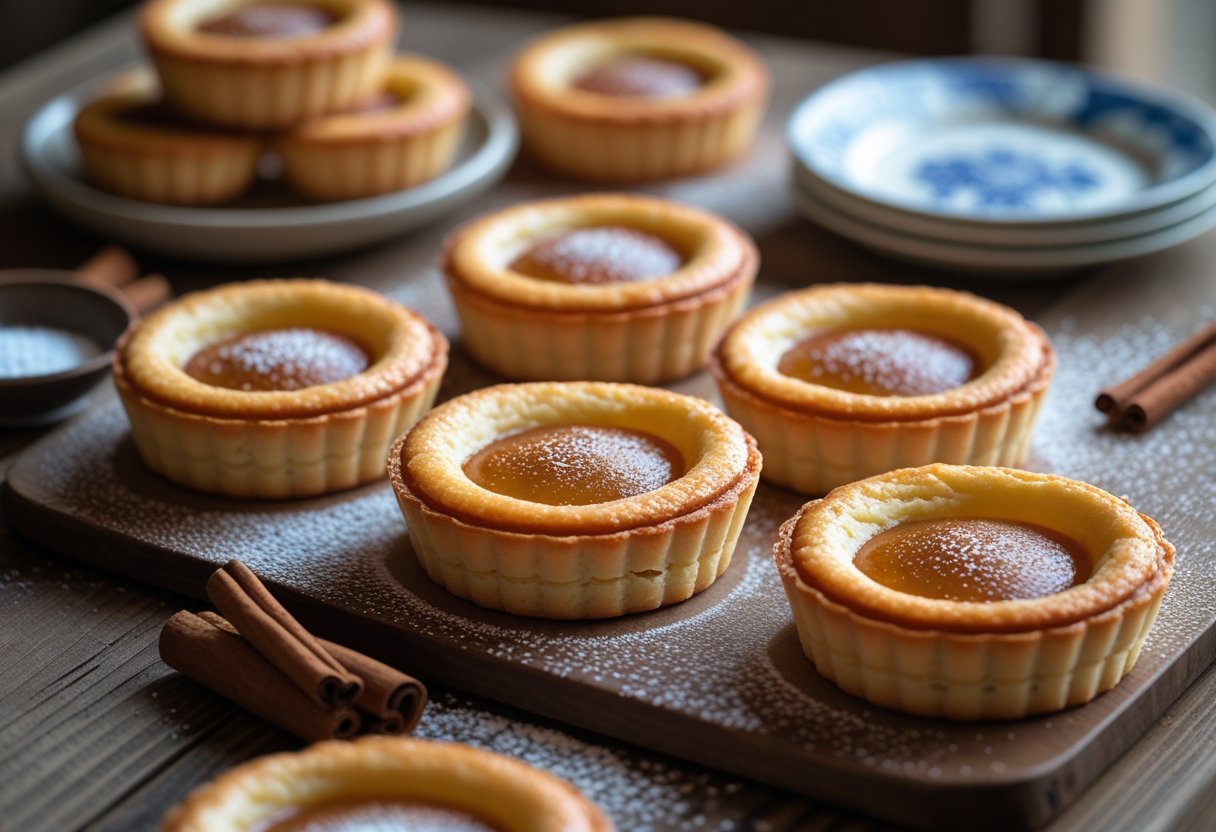
Creating a perfect Pastel de Nata means balancing crisp, flaky pastry with a smooth, silky custard. The right choice of ingredients, careful handling of puff pastry, and achieving the proper caramelized top are all vital.
We also pay attention to traditional toppings that deepen the flavor without overpowering the tart itself.
Ingredients for Pastry and Custard Filling
The foundation of a Pastel de Nata is quality puff pastry and a rich egg custard. Puff pastry must be buttery, flaky, and light.
A mix of flour and butter folded several times gives the pastry its layers. For the custard, we rely heavily on egg yolks for that golden color and creamy texture.
Our filling includes whole milk and sometimes cream, sweetened with granulated sugar. A small amount of flour thickens the custard and gives it body.
Flavorings like vanilla, cinnamon stick, and lemon peel add subtle warmth and brightness. These ingredients combine to form a custard that is smooth, rich, and slightly sweet.
Essential Techniques for Puff Pastry
The puff pastry needs gentle handling to retain its layers. Using store-bought puff pastry is common, but it should be thawed slowly to avoid breaking the layers.
We roll it out thin, then roll into a log and slice it into discs to line muffin tins. This helps create deep pastry cups with even thickness.
Pressing the pastry into shape without tearing ensures the crust bakes crisp and holds the custard well. Keeping the dough cold before baking is important, as warmth can cause the layers to merge, losing their flaky quality.
Baking at high heat supports the rise and crispness we want. No one wants a soggy bottom!
Achieving the Caramelized Tops
A signature of Pastéis de Nata is the caramelized tops with dark spots. This comes from baking at a high temperature, usually above 450°F (230°C).
The heat causes the sugar in the custard to brown and blister, which adds flavor and texture. We keep a close eye during baking to catch the perfect moment—when the custard is set but still creamy, and the tops have their characteristic spots.
This natural caramelization is different from burning. It also creates a slight crispness on the surface, contrasting beautifully with the smooth custard.
Classic Toppings and Variations
Traditionally, a sprinkle of ground cinnamon or powdered sugar enhances the tarts without masking their natural flavor. Cinnamon pairs well with the egg custard’s sweetness and lemon’s citrus notes.
Some recipes add a tiny pinch of cinnamon inside the custard, which deepens the aroma. While the classic Pastel de Nata sticks to simple toppings, variations may include a glaze of apricot jam or fresh fruit for added sweetness.
However, these are less common. Our focus is always on preserving the authentic balance between the flaky pastry, rich custard, and caramelized finish.
Frequently Asked Questions
Pastéis de nata have a rich history and unique taste that many people want to know more about. Here’s a quick FAQ to keep your curiosity (and sweet tooth) satisfied.
How do you pronounce ‘Pastel de nata’ correctly?
We say it as “pash-tel de nah-tah.” This is the Portuguese way of saying the name.
What are the traditional ingredients for making Pastéis de Nata?
The main ingredients include flaky puff pastry and a smooth custard. The custard is made from egg yolks, sugar, milk, and flour.
How can you make an authentic Pastel de nata at home?
To make it yourself, you start with laminated dough similar to puff pastry. The custard mixture is poured into the pastry shells and baked at a high temperature to create a caramelized top.
What is the calorie content of one Pastel de nata?
One pastel typically contains between 200 and 250 calories. For example, a 60g tart from a well-known brand has about 187 calories.
Where in Lisbon can one find the most famous Portuguese tart?
The original and most famous Pastel de nata is found at the Antiga Confeitaria de Belém in Lisbon. There, they follow a secret recipe dating back to 1837, and only tarts from this bakery are called Pastéis de Belém.
Why is the Pastel de nata also referred to as a Portuguese custard tart?
We call it a Portuguese custard tart because of its creamy egg custard filling inside a crispy puff pastry shell.
This name highlights its main features and connects it to other custard tarts around the world.
You can learn more about its pronunciation, ingredients, and history at Nata Pura’s FAQ page.