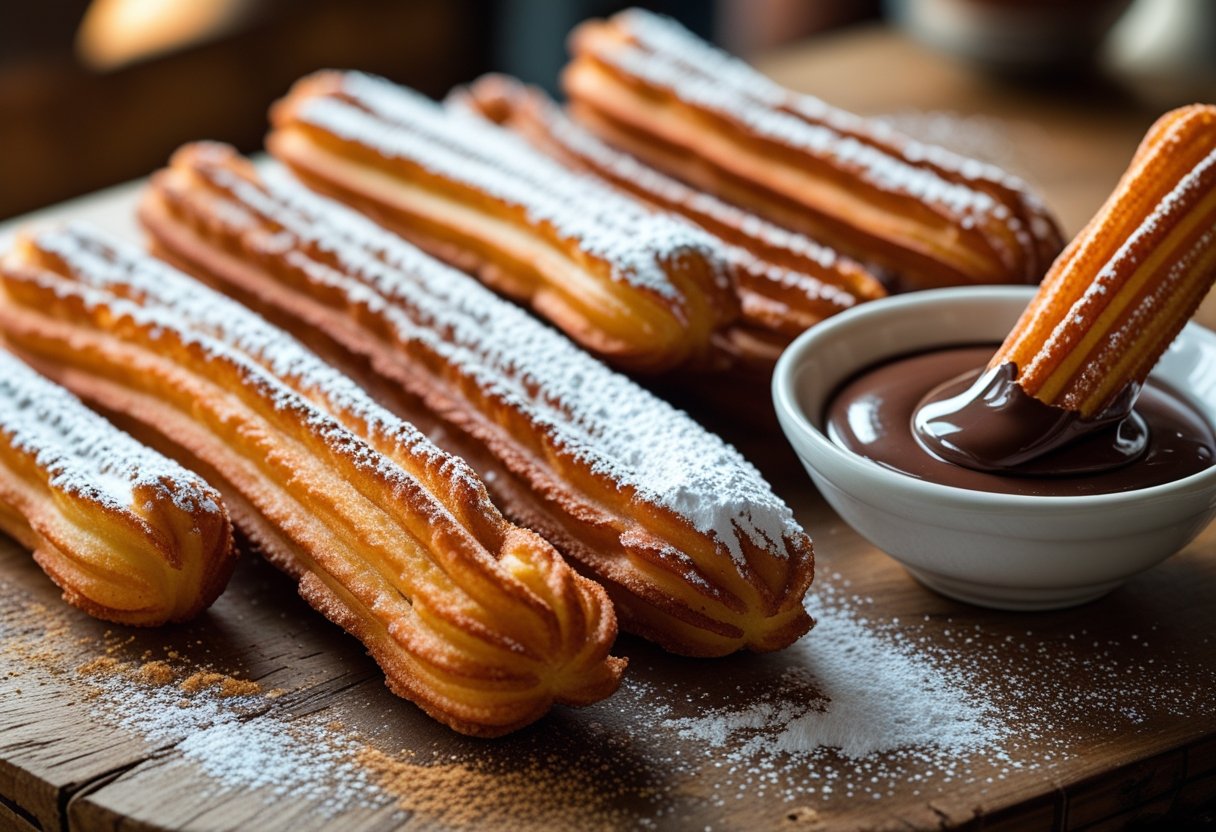
Churros are a beloved treat enjoyed in Spain and many Latin American countries. They’re deep-fried dough pastries, usually ridged from a star-shaped nozzle, and served hot with sugar or dipped in thick chocolate.
Though simple in ingredients, churros carry a rich history that connects different cultures across continents.
Churros started in Spain and Portugal, later hitching a ride to Latin America thanks to colonization. Each region put its own spin on the recipe—think cinnamon sugar in Mexico or dulce de leche fillings in Argentina.
This blend of tradition and local taste makes churros a prime example of culinary exchange.
From street vendors in Spain to festive stalls in Latin America, churros are a symbol of both daily comfort and celebration. Their variety and growing popularity show how food brings people together, creating new traditions while honoring the old ones.
Key Takeways
- Churros are fried dough pastries popular in Spain and Latin America.
- The recipe spread through colonization and varies by region.
- Churros represent a mix of tradition and cultural adaptation.
Origins and Cultural Journey
Churros have a rich and complex background that ties together different cultures and times. Their shape, ingredients, and uses have changed as they traveled from place to place.
We can trace their story back through Europe, Asia, and Latin America, revealing how food traditions mix and evolve.
Early History and Theories of Origin
There are two main ideas about where churros first came from. Some believe they began in China as youtiao, a savory fried dough stick eaten for breakfast.
Portuguese explorers, busy trading in the 16th century, might have brought a version of youtiao to Europe. Europeans then made it sweet and gave it the ridged shape we recognize today.
Another theory points to Spanish shepherds living in the mountains. They made a simple fried dough from flour, water, and salt because baking bread was tough in remote areas.
This dough was easy to cook over fire and reminded them of the curved horns of the Churra sheep, which could explain the name churro.
Influence of Spanish Shepherds and the Moors
The Iberian Peninsula, especially during the Moorish rule, saw plenty of cultural and culinary exchanges. The Moors introduced sugar and new frying techniques to Spanish cooking.
Spanish shepherds crafted churros as a practical snack, easy to prepare while watching their flocks. This strong connection to shepherd life helped churros become a popular staple.
Over time, the Moors’ love for sugar and spices may have helped churros become sweeter and more flavorful. The shepherds’ simple dough eventually turned into the star-shaped fried pastry common in Spanish cuisine today.
Churros in Spain: Tradition and Evolution
In Spain, churros became a beloved snack, often enjoyed for breakfast or as a treat. Traditionally, people dip them in thick hot chocolate—a combo that’s basically a hug in food form.
Their shape evolved too, from simple sticks to star-shaped ridged doughs that crisp up nicely. Spanish churros kept close ties to local customs and were sold by street vendors during festivals.
Regional variations popped up—some thinner, some looped, some with a hint of cinnamon. This evolution shows Spanish cuisine’s knack for keeping tradition alive while inviting small, tasty changes.
Spread to Latin America and Globalization
When Spanish explorers set sail for the Americas, churros tagged along for the ride. In Latin America, churros were quickly adopted and adapted.
Countries like Mexico, Argentina, and Chile added their own flavors and fillings—think cinnamon sugar, caramel, and dulce de leche. Churros also found a home in the Philippines, morphing into the local snack bicho-bicho with its own twists.
Today, churros are popular worldwide—in Latin American markets, U.S. theme parks, and pretty much anywhere people love fried dough. For more details on how churros evolved, check out this history of churros.
Varieties, Preparation, and Modern Trends
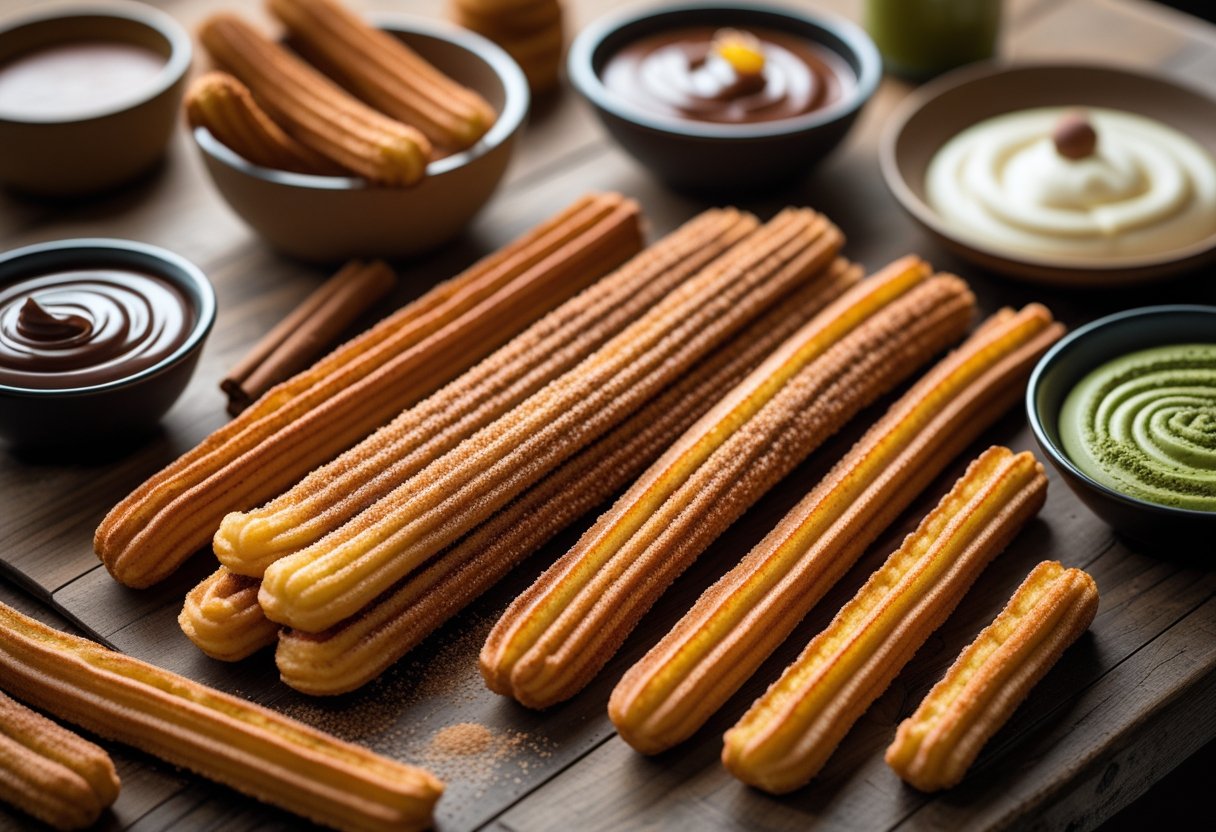
Churros come in all shapes, textures, and flavors across Spain and Latin America. Traditional recipes focus on simple fried dough dusted with sugar, but you’ll find versions with fillings, toppings, and wild serving styles.
These variations reflect local tastes and cultural influences, making churros an endlessly versatile treat.
Traditional Spanish Churros and Regional Types
In Spain, churros are usually slender and crispy, made from a dough of wheat flour, water, and salt. The dough is piped through a star-shaped nozzle, creating ridges that hold sugar or chocolate.
Some regions serve porras—thicker, fluffier churros made with a bit of leavening. Fresh churros from churrerías are a popular breakfast item, often dipped in thick hot chocolate or enjoyed with café con leche.
There are looped churros in some parts of Spain and even slightly cinnamon-flavored options, just to keep things interesting.
Latin American Styles and Fillings
Latin America takes churros to another level. In Mexico, churros are often sold by street vendors, coated in cinnamon sugar, and filled with dulce de leche, cajeta, or sweetened condensed milk.
They’re popular at carnivals and festivals, and sometimes even come in mini versions or filled with fruit preserves or whipped cream. Peruvians sometimes turn churros into elaborate desserts, combining local flavors for extra flair.
Popular Accompaniments and Pairings
Churros love a good dip. The classic Spanish combo is churros con chocolate—thick hot chocolate that’s basically a spa day for fried dough.
In Latin America, you’ll find chocolate sauce, caramel, and fruit-based dips. Coffee drinks like café con leche or espresso are perfect partners, cutting through the richness and making you feel just a little bit fancy.
Street vendors and churrerías often offer churros with sugar or cinnamon sugar coatings for easy snacking on the go.
Modern Innovations and Global Appeal
Churros aren’t stuck in the past—they’ve gone global and gotten creative. In the U.S. and beyond, you’ll find churro ice cream sandwiches, milkshakes, and churros filled with all sorts of unexpected flavors.
They’re a hit at carnivals, fairs, and trendy dessert shops, where classic comfort meets wild imagination. This global love keeps churros relevant in modern food culture.
For more on churro varieties and cultural twists, check out guides on the globalization of churros and Spanish churros.
Frequently Asked Questions
Churros are made from simple ingredients but have a rich history and plenty of regional variety. Their story stretches from Spain to Latin America, with each version reflecting unique tastes and traditions.
What are the traditional ingredients used in making churros?
The basic ingredients are flour, water, and salt. Mix them into a dough, fry until crispy, then dust with sugar and maybe cinnamon if you’re feeling fancy.
Can you explain the origin of churros in Spain?
Churros likely originated in Spain, possibly as a simple bread substitute made by shepherds. The name “churro” is linked to the Churra sheep, whose horns look a lot like the snack.
How do the recipes for churros differ between Spain and Latin America?
Spanish churros are thinner and usually plain or lightly dusted with sugar. They’re often eaten with thick hot chocolate for dipping.
Latin American churros, especially in Mexico, are thicker, rolled in cinnamon sugar, and often filled with sweet creams like dulce de leche or chocolate.
Which country is renowned for its churros?
Spain is the OG home of churros, where they started as a breakfast or snack food. Mexico is famous for turning churros into a sweeter, more indulgent street food with fillings and cinnamon sugar.
What is the historical background of churros in Spain?
Churros have been part of Spanish food culture since at least the 16th century. Their rise is linked to shepherds in mountainous areas and possibly to fried dough treats brought by Portuguese traders from China. They became a popular snack to enjoy with thick hot chocolate.
How has the churros recipe evolved over time in Spanish and Latin American cuisine?
The core churros recipe has always been pretty simple—just dough, fried until golden and delicious. But Latin America decided to spice things up with flavors like cinnamon and fillings such as caramel or chocolate.
Meanwhile, in Spain, churros have stuck to their roots. Some regions even have their own twist, like “porras,” which are thicker and fluffier thanks to a little extra leavening.
Turns out, churros are the ultimate passport snack, adapting to local tastes wherever they go!