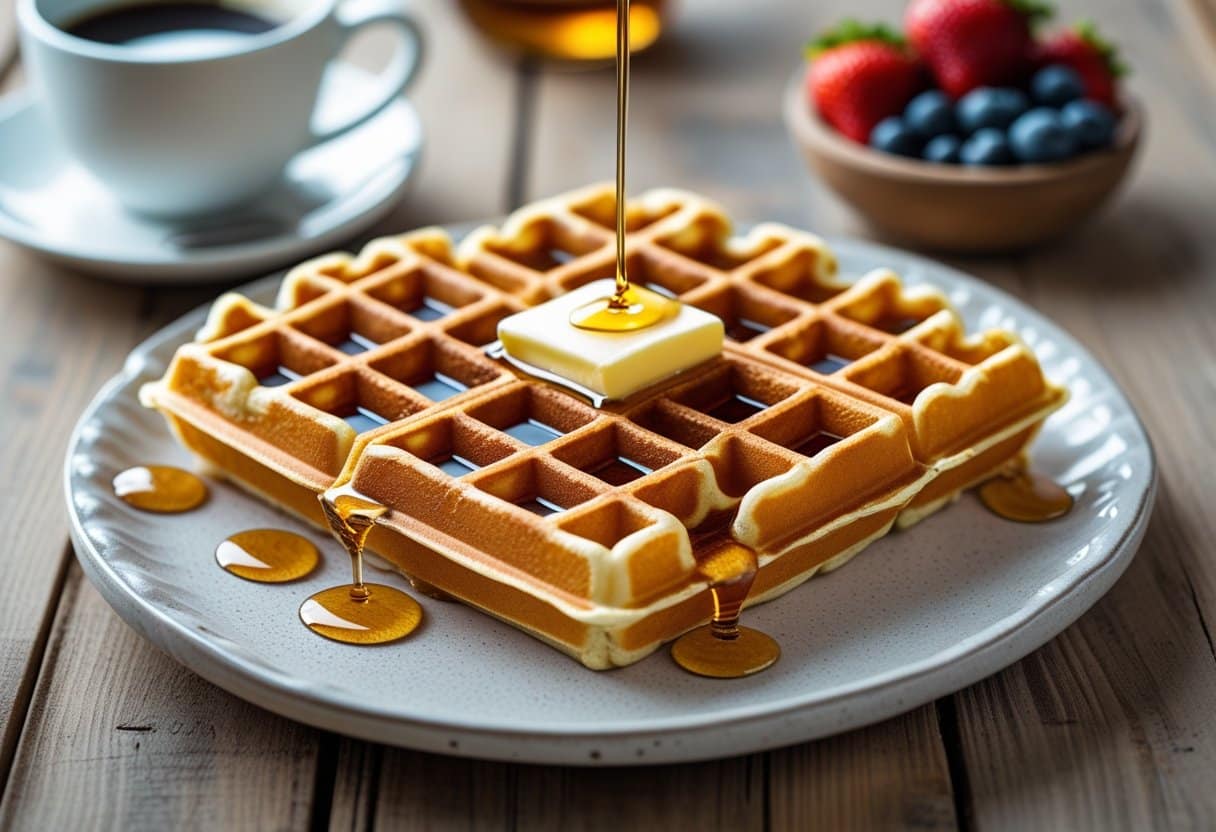
Belgian waffles are famous for their light, fluffy insides and crispy outsides. They’re a top pick for breakfast or dessert.
What really sets Belgian waffles apart are their deep pockets and larger size. Originally, they were made with yeast for extra flavor and texture, but these days, baking powder often sneaks into the mix for convenience.
Toppings? Oh, absolutely. Whipped cream, fresh fruit, syrup—pile it on and enjoy the magic.
Belgium doesn’t do just one kind of waffle. The Brussels waffle is light and crispy, while the Liège waffle is denser and sweeter, thanks to caramelized pearl sugar.
Each type has its own personality, so it’s worth getting to know them both.
If you’re making waffles at home or ordering at a café, knowing the right ingredients and techniques makes all the difference. From the batter to the cooking method, every step counts toward that perfect bite.
Key Takeaways
- Belgian waffles have larger pockets and a lighter texture than regular waffles.
- Different types offer unique textures and sweetness.
- Using the right ingredients and cooking methods is crucial for top-tier waffle goodness.
Belgian Waffle Varieties and Traditional Techniques
Belgian waffles come in a few delicious styles, each with its own quirks. The prep methods and ingredients decide their final taste and texture.
Classic Belgian Waffles
Classic Belgian waffles are what most people picture: rectangular, with big, deep pockets. They’re light and crispy outside, soft and pillowy inside.
The batter usually gets its fluff from active dry yeast or whipped egg whites. That’s the secret to their airy texture.
You’ll need a Belgian waffle iron to get that classic look and size. These irons make waffles that are thicker than your everyday variety.
Classic Belgian waffles love toppings like powdered sugar, whipped cream, or fresh fruit. The contrast of crispness and sweetness is chef’s kiss.
Liège Waffles and Pearl Sugar
Liège waffles are the rebels of the waffle world: richer, denser, and made from dough, not batter. They’re packed with pearl sugar that caramelizes during cooking, creating sweet, crunchy pockets.
This gives them a beautiful golden color and a chewy, satisfying bite.
Liège waffles are smaller and have a more rustic shape than their Brussels cousins. They’re often enjoyed plain or with a simple spread—because when you’re this good, you don’t need much else.
The dough needs more kneading than a batter and gets its magic from that melting sugar.
Batter Preparation and Leavening Methods
How you prep your batter or dough totally changes your waffle game. Classic Belgian waffle batter often uses active dry yeast and sometimes gets an overnight nap in the fridge for extra flavor.
Yeast gives a mild complexity that baking powder just can’t match. Some folks use baking powder for speed, but purists stick with yeast.
Folding in whipped egg whites can add even more lift. And don’t forget—a proper Belgian waffle iron is your ticket to crispy, fluffy perfection.
Essential Ingredients, Equipment, and Serving Suggestions
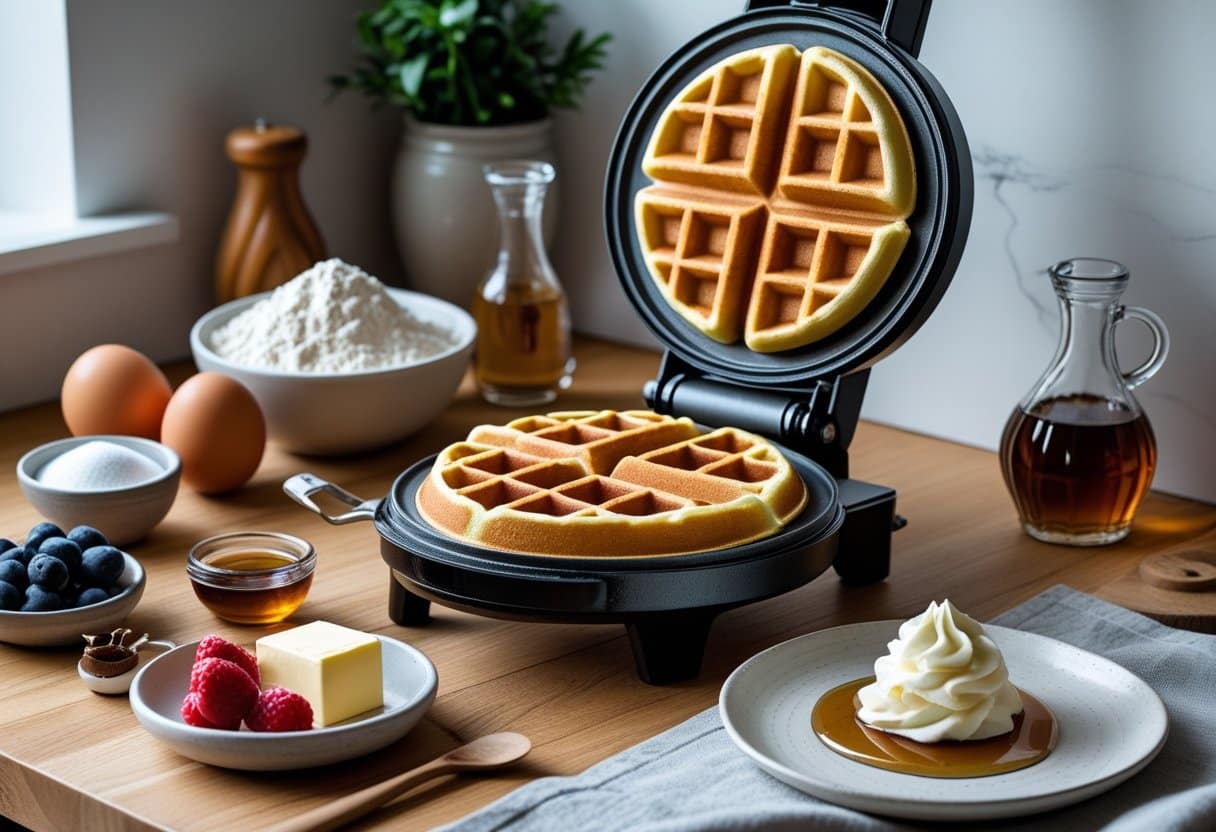
Making authentic Belgian waffles is all about the right ingredients and tools. From flour to toppings, every choice shapes your final masterpiece.
A good waffle maker is also key for those deep pockets and crispy outsides.
Common Ingredients and Alternatives
Most batters start with all-purpose flour for structure and tenderness. Yeast adds chew and complexity, while baking powder is the shortcut to a quick, soft waffle.
Unsalted butter brings richness and helps prevent sticking. Egg yolks add color and depth, and whipped egg whites bring the fluff.
Milk is the usual liquid, but almond or other plant-based milks work if you’re feeling fancy. Sugar sweetens the deal, and salt makes everything pop.
A splash of vanilla extract never hurts. If you’re out of regular sugar, brown sugar or honey will do (just expect a flavor twist).
For finishing touches, powdered sugar is always a crowd-pleaser.
Choosing and Using a Waffle Maker
You’ll want a Belgian waffle maker with deep grids for that signature look. Adjustable heat settings let you control how golden and crispy things get.
Preheat your waffle maker—nobody likes a soggy waffle. A quick brush of butter or oil keeps things from sticking, but don’t drown it.
Non-stick surfaces make cleanup a breeze. Some irons make Brussels-style rectangles, others do the Liège-style rounds—choose your fighter.
Once your waffles are done, don’t stack them or cover them tightly. Let them chill on a wire rack or keep them warm in a toaster oven to stay crispy.
Popular Toppings and Ways to Serve
Belgian waffles are basically blank canvases for toppings. Brussels-style waffles are great with a dusting of powdered sugar and a heap of fresh berries, strawberries, or bananas.
Whipped cream is always a good idea. For the sweet tooth, classic maple syrup is a must.
If you’re a chocoholic, go wild with chocolate sauce or chocolate chips. Nut butters like peanut butter add a savory twist.
Liège waffles are so sweet and rich, they’re often eaten plain or with just a little syrup or pearl sugar. Warm waffles off the iron are unbeatable, but reheating works in a pinch.
Basically, you can top your waffle with whatever your heart desires—just don’t forget to enjoy every bite.
Frequently Asked Questions
Here’s the lowdown on making authentic Belgian waffles, picking the right gear, and understanding the waffle family tree.
What is the authentic Belgian waffle recipe?
Authentic Belgian waffles come in two main flavors: Brussels and Liège. Brussels waffles use a light, yeast-leavened batter that chills out for about 90 minutes to get flavorful.
The ingredients are simple: flour, yeast, eggs, butter, milk, and vanilla.
Liège waffles are made from a rich, brioche-like dough loaded with Belgian pearl sugar. The dough rises, and the sugar caramelizes as it cooks, making each bite sweet and crunchy.
How do I choose the best Belgian waffle maker?
Look for a waffle maker with deep pockets—about an inch or more is ideal. Flip models are great because they spread the batter evenly and cook both sides to perfection.
Adjustable temperature controls help you get that crispy outside without going full charcoal. Avoid standard American waffle irons; they just don’t have the depth for authentic Belgian waffles.
What distinguishes Belgian Liege waffles from Brussels waffles?
Brussels waffles are rectangular, light, and airy, with a thin, yeast-leavened batter (sometimes with whipped egg whites). They’re crisp on the outside and tender inside.
Liège waffles are irregular in shape, denser, and chewier, with a dough base. Pearl sugar creates caramelized, crunchy pockets, making them sweeter and perfect for eating by hand.
What is the secret to making crispy and fluffy Belgian waffles?
Yeast is your friend for flavor and texture. Letting the batter or dough ferment works wonders.
Whipping egg whites separately and folding them in gives you extra fluff—especially for Brussels waffles. Get your waffle iron hot enough for a golden crust and tender inside.
Cool your waffles on a wire rack to keep them crispy and avoid the dreaded sogginess.
Why are waffles a symbol of Belgian cuisine?
Waffles are a tasty tradition in Belgium, with each region showing off its own style and ingredients. They’re a point of pride and a staple street food.
From festive treats to everyday snacks, Belgian waffles are a delicious symbol of local craftsmanship and culinary history.
In what ways are Belgian waffles different from American waffles?
Belgian waffles have deeper pockets that are perfect for catching all your syrup and fruit. American waffles, on the other hand, are usually thinner and flatter.
The batter for Belgian waffles is lighter and often uses yeast. American waffles typically rely on baking powder instead.
Fermentation in Belgian waffles adds a more complex flavor. This also helps create a crispy outside with a fluffy inside.
For more detail on recipes and techniques, check out our guide on making authentic Belgian waffles.