Glow-in-the-dark donuts are a wild way to brighten up any party or breakfast. We can make these glowing treats at home using tonic water in the frosting, which makes them light up under black light—no mad scientist degree required.
This simple trick adds a surprising effect to a classic favorite. Just imagine the look on your friends’ faces when you turn off the lights and your donuts start glowing like edible UFOs.
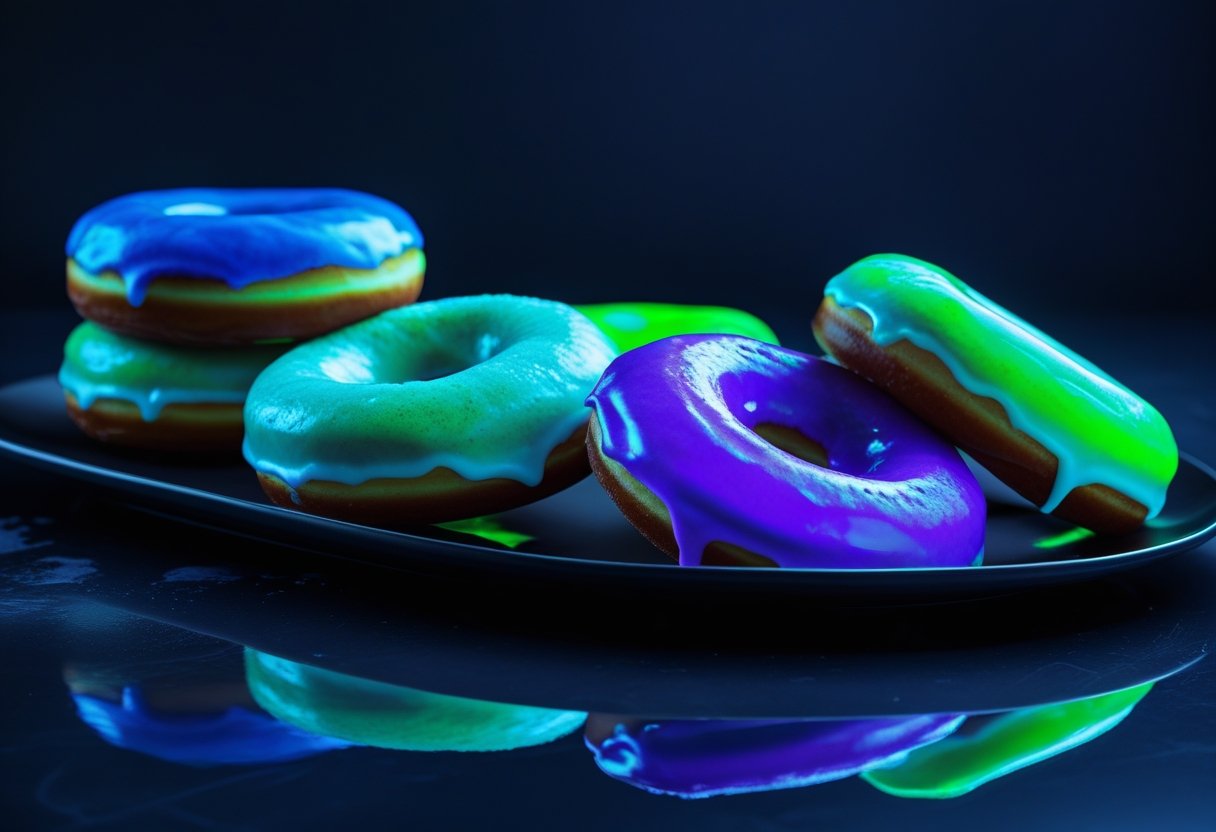
Making glow-in-the-dark donuts is easy once you know the recipe. We use standard donut ingredients, but the secret is in the icing, where tonic water’s quinine reacts to black light.
This recipe lets us enjoy both the taste and the cool glow effect with minimal extra effort. These donuts are great for celebrations or just a fun kitchen project.
Let’s explore how to make our own glowing donuts that impress and delight. For the full recipe, check out this detailed guide on how to make glow-in-the-dark donuts at home.
Glow-in-the-Dark Donuts Recipe Overview
Making glow-in-the-dark donuts, or glonuts, requires specific ingredients and careful steps. Attention to the dough, frying process, and especially the frosting is key to getting that party-worthy glow.
Essential Ingredients and Equipment
The main ingredients for the donuts include all-purpose flour, sugar, baking powder, baking soda, salt, buttermilk, eggs, butter, and vanilla extract. Vegetable oil is needed for frying.
For the glowing frosting, tonic water is the MVP. It contains quinine, which glows under black light.
Powdered sugar and vanilla extract round out the frosting. Essential equipment includes a mixing bowl, donut cutter (or round cutters), a large saucepan or deep fryer, a slotted spoon, and a wire rack for cooling.
Step-by-Step Donut Preparation
We start by mixing dry ingredients: flour, baking powder, baking soda, and salt. In a separate bowl, whisk buttermilk, eggs, melted butter, and vanilla.
Combine both mixtures until a thick dough forms. Chill the dough for 45-60 minutes to make it easier to shape—think of it as a donut spa day.
Roll out the dough to about half an inch thick and cut into donut shapes. Heat the vegetable oil to 355-360°F, then fry the donuts for about three minutes per side until golden brown.
Drain donuts on paper towels to remove excess oil. Let them cool before frosting—patience, young grasshopper.
Making the Glow-in-the-Dark Frosting
The glowing frosting uses powdered sugar mixed with tonic water and vanilla extract. Start with three cups of powdered sugar and about four tablespoons of tonic water.
Whisk until the consistency is thick but spreadable. Adjust the tonic water if necessary—don’t go overboard or you’ll have donut soup.
The quinine in the tonic water is what makes the frosting glow under a black light. Vanilla extract adds flavor and helps balance the tonic water’s slight bitterness.
How to Apply the Frosting for Best Results
Once the donuts have cooled, dip them one at a time into the frosting. Use a wire rack to let extra frosting drip off and to allow the glaze to set without sticking.
Don’t rush this step because a well-set frosting is brighter and glows better. We recommend letting the donuts dry for at least 15 minutes before exposure to black light.
Applying frosting while the donuts are warm can cause it to slide off, so ensure they are fully cooled. Nobody wants a slippery donut disaster.
Tips, Safety, and Serving Ideas
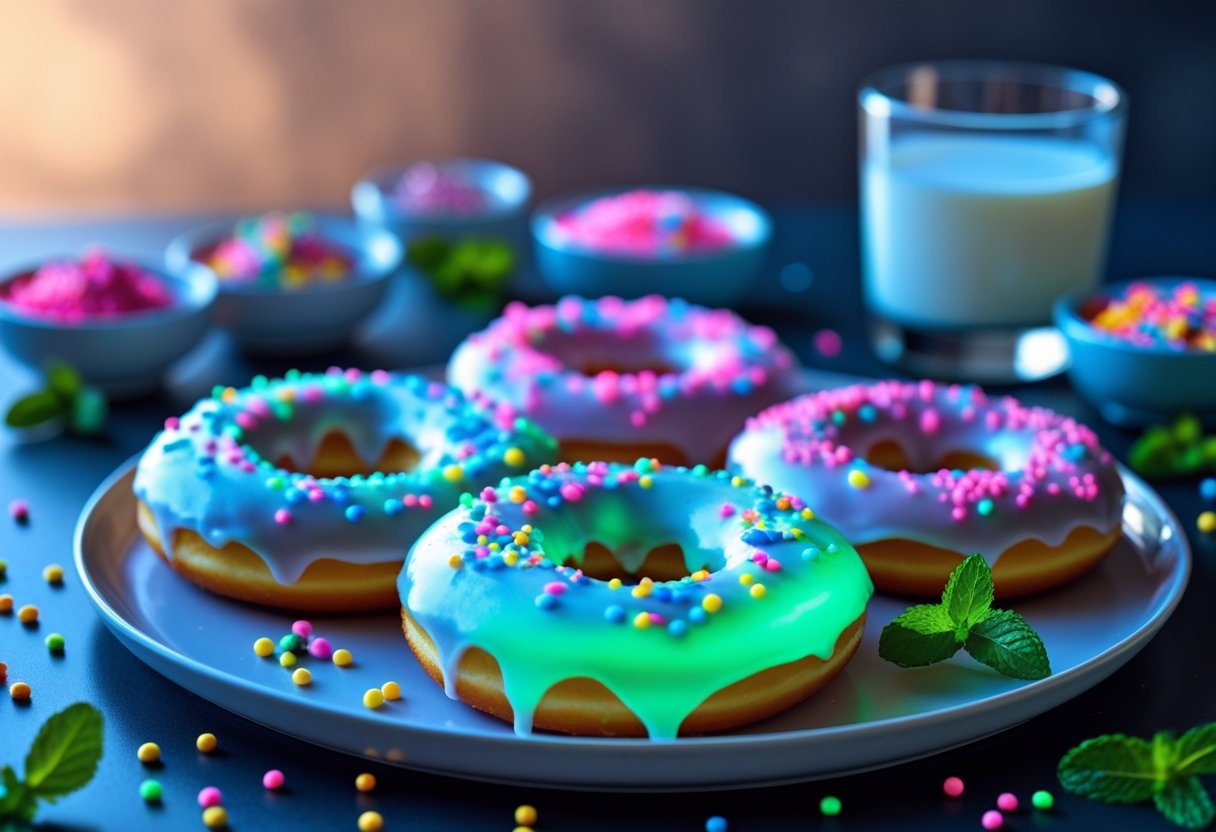
Proper lighting and careful handling help make glow-in-the-dark donuts stand out safely and deliciously. We also want to make sure they look great and taste good without too much fuss.
Using the right tools and ingredients helps us create glowing treats that impress and delight. Let’s get glowing!
Using Black Light for the Glow Effect
To make our glow-in-the-dark donuts really shine, a black light (UV-A) is essential. The black light emits ultraviolet rays that cause the fluorescent ingredients, like riboflavin or tonic water, to glow.
Use a dedicated black light bulb or flashlight designed for UV use. Regular lights won’t make the donuts glow—sad but true.
Position the black light about 6 to 12 inches from the donuts for maximum effect. Keep the room dark and limit other light sources for the best glow party.
Don’t stare directly into the black light for long periods—your eyes will thank you. If you’re going full mad scientist, UV-protective glasses are a nice touch.
Creative Presentation for Parties
When serving glow donuts, presentation is everything. Using white or light-colored plates will reflect the glow and make the colors pop.
Clear glass or acrylic trays also help highlight the luminous effect. Pair glonuts with other glowing party items like neon cups, glowing straws, and matching decor.
Adding edible glitter or colored sugars gives sparkle without hiding the glow. For extra fun, place the donuts in a dark corner lit only by black lights—watch your guests swarm like moths to a neon flame.
Flavor Variations and Shortcuts
For flavor, we can mix riboflavin with vanilla or citrus-flavored glazes. The slight bitterness of riboflavin can be balanced with sweeteners like honey, sugar, or flavored syrups.
Tonic water as a liquid base in the glaze adds a subtle citrus taste and natural glow. Want to save time? Store-bought plain or vanilla donuts work perfectly.
Just brush or dip them in the glowing glaze—no need to play donut hero every time. For variety, try adding natural food coloring or fruit extracts for mild flavors that don’t overpower the glow.
This way, you can make a batch of glonuts with different tastes and colors for guests to enjoy. For more creative glow party ideas, check out 21 glow in the dark party ideas for an epic glowing celebration.
Frequently Asked Questions
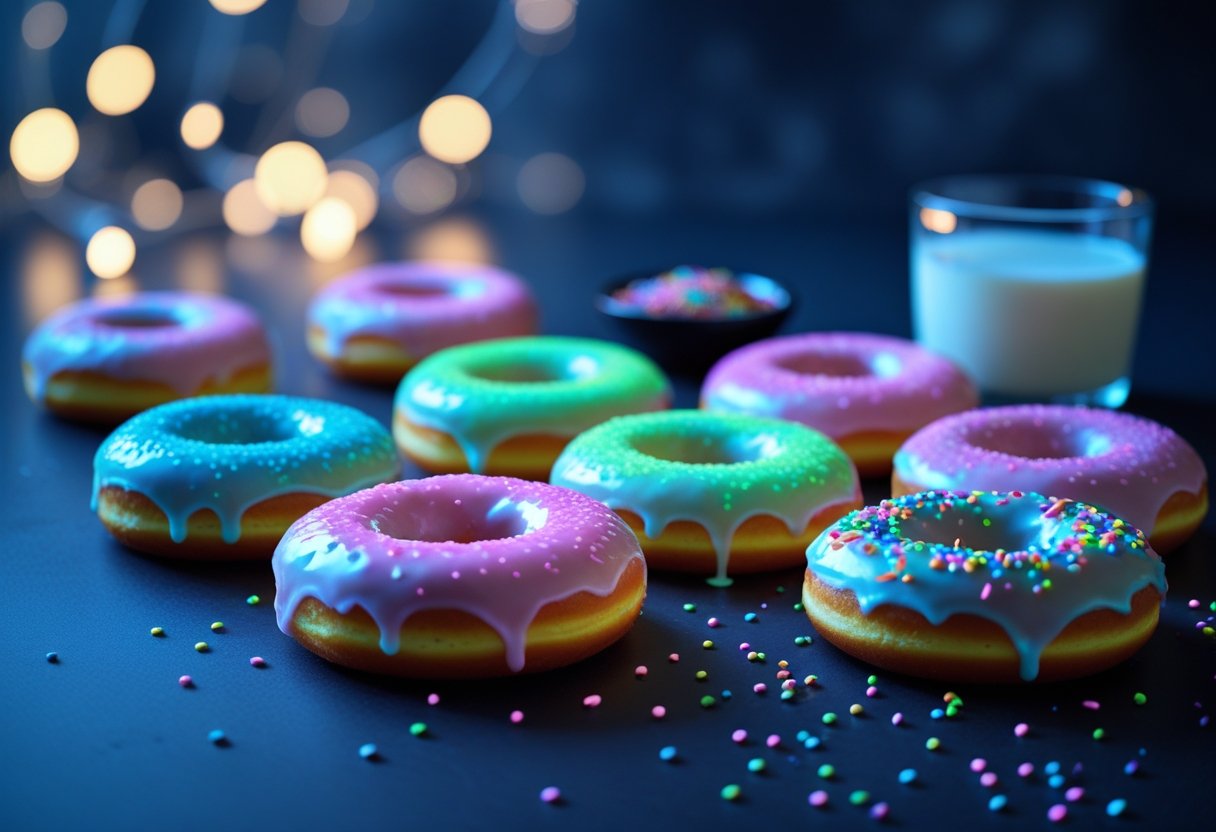
Glow-in-the-dark donuts rely on special ingredients and techniques to create the glowing effect safely and effectively. We use common baking steps combined with unique glow-enhancing items like tonic water or vitamin B to bring these treats to life under black light.
What ingredients are used to make donuts glow in the dark?
The glow usually comes from quinine found in tonic water or vitamin B2 in the frosting. Both ingredients react under black light to produce the glowing effect.
We often add these to the glaze or icing rather than the dough.
How can I safely add a glow-in-the-dark effect to food?
We use only edible ingredients approved for consumption that naturally glow under UV light. Ingredients such as tonic water and vitamin B2 are safe when used in typical food amounts.
Avoid any non-food glow powders or chemicals. Please, leave the science experiments to the professionals.
What is the process for making glow-in-the-dark donuts at home?
We start with a regular donut recipe and add tonic water or vitamin B2 to the glaze. After the donuts are baked and cooled, we frost them with the glowing glaze.
Displaying them under a black light reveals the glow. Voilà—glonuts!
Which edible glow-in-the-dark colors are available for baking?
Most edible glow effects are blue or green under black light due to quinine or vitamin B2. Some food-safe color additives can alter the glaze color, but don’t expect a rainbow glow.
Can tonic water be used to make donuts glow under black light?
Yes, tonic water contains quinine, which glows blue under black light. Adding tonic water to the frosting or glaze creates a safe, glowing layer on the donuts.
How do you ensure the glow-in-the-dark effect on donuts is non-toxic?
We stick to safe, edible ingredients like tonic water and vitamin B2—nothing sketchy or science-lab-only here. No weird chemicals or artificial glowing stuff make it into our donuts.
Basically, if you can eat it, we’ll let it glow. Safety first, party second!