Sugo is a simple Italian tomato sauce that brings a fresh, rich flavor to any pasta dish. It is made with just a few quality ingredients like olive oil, onions, whole tomatoes, and fresh basil, cooked slowly to deepen the taste. This straightforward recipe shows how less can be more when it comes to sauce.
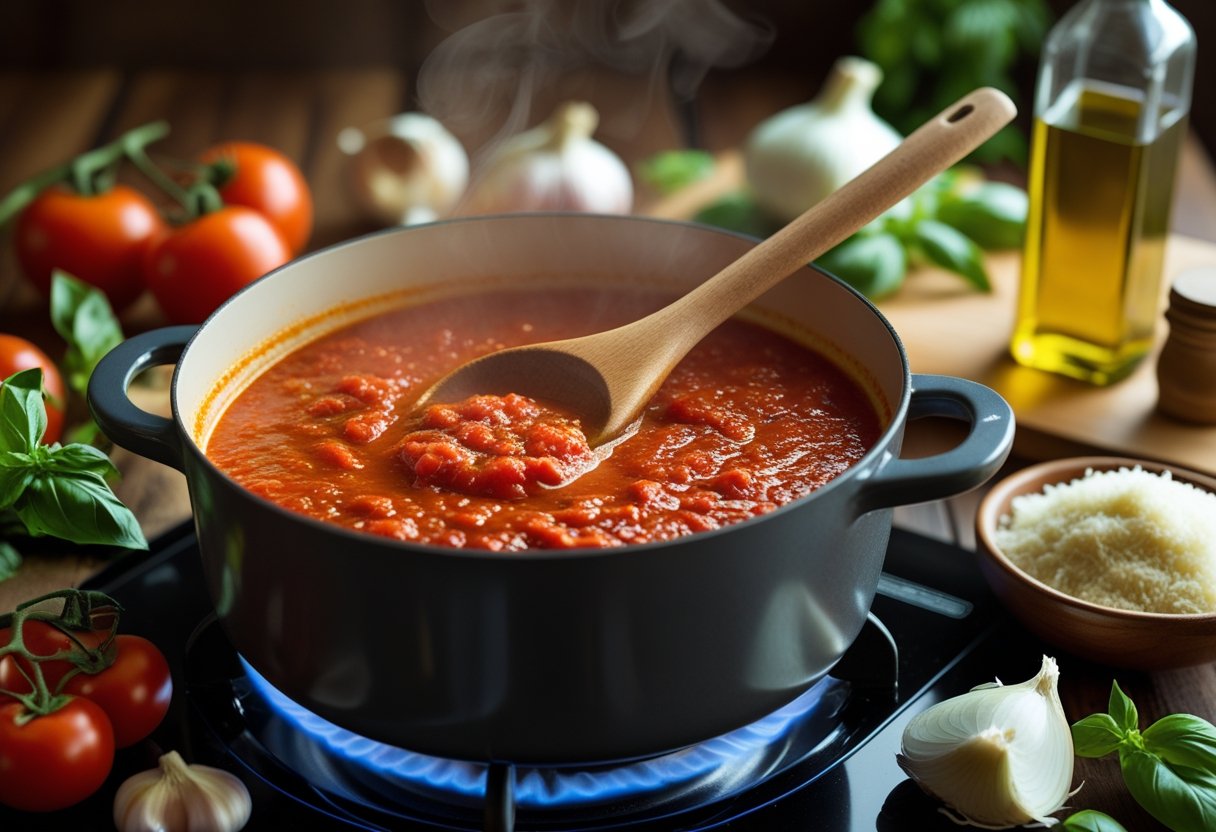
We often confuse sugo with marinara, but sugo focuses solely on the pure taste of tomatoes without many spices or extras. Its slow cooking method helps concentrate those flavors, making it a versatile sauce for pasta, gnocchi, or even as a base for other Italian dishes.
By mastering sugo, we gain a foundation for many classic Italian meals. We will guide you through an authentic recipe that is easy to follow and perfect for daily cooking.
How to Make the Best Sugo Recipe
Making the best sugo involves using a few key ingredients and cooking them carefully. We focus on quality canned tomatoes and fresh herbs to create a simple yet rich tomato-based sauce. Mastering the slow simmer and knowing how to adjust flavors allows us to get the perfect texture and taste every time.
Essential Ingredients for Authentic Sugo
We start with San Marzano whole peeled tomatoes for their balanced sweetness and low acidity. Using canned tomatoes ensures consistent flavor year-round. A small sweet onion, finely diced, melts into the sauce for natural sweetness without overpowering it.
Extra virgin olive oil is crucial for a rich base. We gently cook the onion in it.
Next, whole garlic cloves are crushed and added to infuse flavor without becoming sharp or bitter. We remove the garlic before finishing the sauce.
We finish with fresh basil leaves torn into the sauce at the end. This adds freshness and aroma.
Optional ingredients like a splash of red wine, a pinch of sugar to balance acidity, or herbs like oregano or thyme can enhance flavor depending on preference.
Step-by-Step Cooking Instructions
First, heat the olive oil over medium heat in a saucepan.
Add diced onion and cook until it softens, about 3-4 minutes.
Add smashed whole garlic cloves and cook 2 minutes to infuse oil, then remove the garlic.
Pour in the canned San Marzano tomatoes with their juices.
Crush the tomatoes with a spoon or cut them with kitchen scissors.
Add red wine if using, bring to a low simmer, and cover the pot.
Simmer gently for 20 minutes, then uncover, add sugar or herbs if desired.
Continue simmering for 30-40 minutes, stirring occasionally, until the sauce thickens and turns deep red.
Before serving, we lightly blend with an immersion blender to smooth out the texture but keep some pieces intact.
Stir in fresh basil and season with kosher salt to taste.
Tips for Slow Simmer and Perfect Texture
A slow, gentle simmer is key to developing sugo’s deep flavor.
Keep the heat low so the tomatoes cook evenly without burning.
Covering the pot helps trap moisture early, then uncover at the end to reduce excess liquid.
Crushing tomatoes during cooking breaks them down and releases their sweetness.
Simmering time can vary from 45 to 60 minutes depending on the desired thickness.
We avoid over-blending to keep a rustic, fresh texture.
Use kitchen shears to cut tomatoes for even cooking.
Don’t rush this process—patience improves both flavor and texture.
Popular Sugo Recipe Variations
Some like to add red pepper flakes or red chili flakes for heat.
Others use a spoonful of tomato paste to boost the sauce’s richness and color.
A version called sugo di pomodoro sticks strictly to basic ingredients for a pure tomato taste.
Adding herbs like Italian parsley or swapping basil for oregano changes the flavor profile.
Some include bay leaves during cooking for a subtle earthiness but remove them before serving.
We can turn sugo into a meat sauce by simmering with ground beef or pork, creating a rich Sunday gravy.
Finally, blending fresh passata with canned tomatoes helps smooth the sauce without losing flavor.
Each variation adjusts the classic recipe while honoring Italian cuisine’s simple, fresh style.
For detailed ingredient choices and instructions, visit this authentic Italian sugo recipe.
Serving Sugo: Pasta Pairings and Classic Dishes
Sugo pairs best with certain pasta shapes, and choosing the right one helps the sauce cling and enhance every bite. We also find that adding specific meats and cheeses brings more depth and texture to the dish. Finally, simple side dishes can complete the meal without overpowering the rich flavors of the sauce.
Traditional Pasta Types for Sugo
We often use spaghetti as a classic choice because its long strands catch the sugo well, allowing for an even coating. However, shapes like rigatoni, penne, and pappardelle work well, too. Rigatoni and penne have ridges and hollow centers that trap the sauce inside, giving each bite a burst of flavor.
For richer, thicker sugos like ragu or Italian Sunday gravy, wider pasta such as tagliatelle or pappardelle can hold up to the heavier sauce. It’s important to cook pasta al dente, so it has a firm texture that balances the softness of the sauce.
Classic Meat and Cheese Additions
Adding homemade Italian meatballs or Italian sausage made from pork shoulder or pork loin brings heartiness to sugo. These meats absorb the sauce flavors while adding their own savory notes. We also like to use meat cooked in the sauce, like pork chops or meat slow-simmered in the traditional Sunday gravy style.
Cheese is essential. Sprinkling freshly grated Parmigiano Reggiano or Pecorino Romano on top gives a salty, nutty finish. Creamy cheeses like ricotta also pair well, especially when layered in dishes like lasagne, where sugo acts as the base.
Suggested Side Dishes and Complements
To keep the meal balanced, we often serve Italian bread, perfect for soaking up leftover sugo. A fresh Caesar salad or a simple green salad with spinach adds a bright contrast to the richness of the sauce.
Garlic bread with a butter and herb spread complements tomato pasta dishes perfectly. These sides bring texture and freshness without competing with the strong flavors of sugo, making them ideal for a full, satisfying Italian meal.
For an authentic experience, these elements come together to showcase the true flavor of classic Italian red sauce dishes.
You can find variations and more tips on classic Italian sugo recipes.