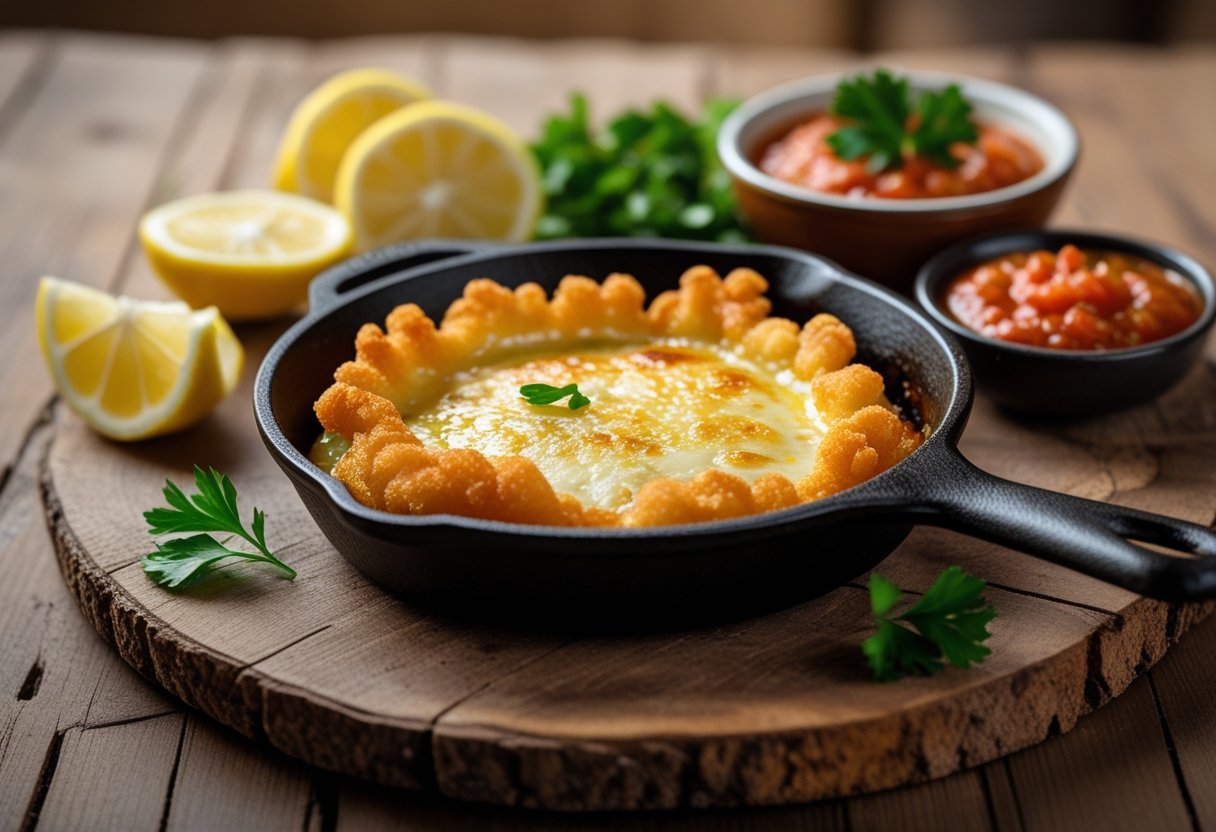
Saganaki is a classic Greek appetizer made by frying a firm cheese until it is golden and crispy on the outside while remaining soft and gooey inside. Our saganaki recipe uses just a few simple ingredients—cheese, flour, and olive oil—to create a flavorful and quick fried cheese dish that works perfectly as a starter. This appetizer has a rich tradition in Greek cuisine and offers a satisfying mix of textures and tastes.
We want to make sure you know how to choose the right cheese for saganaki. Traditionally, Greek cheeses like graviera or kefalotyri are best because they hold their shape well when fried but melt inside. If you can’t find these, other firm cheeses like provolone or Monterey Jack also work. Cooking saganaki involves pan-frying rather than deep-frying, which keeps the crust thin and the flavor balanced.
By following our straightforward cooking steps, you will be able to enjoy this timeless Greek fried cheese at home, served hot with a squeeze of lemon. Whether you’re cooking for family or entertaining guests, this cheese recipe offers a simple yet authentic way to bring a taste of Greece to your table. You can learn more about making this delicious Greek appetizer with a traditional saganaki recipe.
Essential Ingredients and Cheese Selection
To make the best saganaki, we focus on choosing the right cheese and supporting ingredients. The cheese must hold its shape when fried and develop a crisp, golden crust. We also need good-quality olive oil and carefully consider flour for some cheeses to achieve the perfect texture.
Traditional Greek Cheeses for Saganaki
Kefalograviera is our top choice for authentic saganaki. It is firm, salty, and crisps beautifully without melting into a mess. This cheese balances a nutty flavor with a soft, melty inside, making it ideal for pan-searing.
Other traditional options include Kasseri, which is softer and stretchier but less crisp, and Graviera, which has a buttery, mild taste and browns nicely. Kefalotyri is dense and very salty but can dry out if cooked too long. Feta is not suitable for saganaki because it crumbles and melts too much for frying.
Alternative Cheese Options
If we don’t have access to traditional Greek cheeses, Halloumi is a practical alternative. It is widely available, holds its shape, and sears well with a squeaky texture. However, Halloumi is less melty compared to Kefalograviera.
For cheeses like Halloumi and Kasseri, lightly dusting with flour helps absorb moisture and reduces oil splatter. This flour coating also promotes a better crust since these cheeses are softer and have a lower melting point.
Key Supporting Ingredients
We rely on extra-virgin olive oil for frying. It must have a high smoke point and be hot before adding the cheese to avoid greasiness or burning. The oil creates the crispy crust essential to saganaki’s texture.
Lemon wedges add acidity that cuts through the richness of the fried cheese. Some prefer to drizzle honey for a sweet contrast, but this is optional. If we choose to flambé, a splash of ouzo or brandy adds subtle flavor and flair, though it is not traditional in Greece.
Step-By-Step Guide to Making Saganaki
To make saganaki well, we focus on selecting and prepping the right cheese, coating it correctly, frying it carefully, and getting the perfect golden crust. Every step matters, from handling the cheese to cooking it in the right oil and pan.
Preparing the Cheese
Choosing the right cheese is key. We prefer firm, salty cheeses like Kefalograviera because they hold their shape during frying. We slice the cheese into pieces about half a centimeter thick. This thickness helps the cheese cook evenly without melting into a mess.
If we don’t have Kefalograviera, we opt for similar cheeses like Halloumi or Kasseri. For these softer cheeses, we keep the slices dry by gently patting them with paper towels before cooking. Drying the surface helps reduce oil splatter and creates a better sear.
Dredging and Coating
For firmer cheeses like Kefalograviera, we don’t need to coat the cheese. However, softer or more elastic cheeses often need a light dusting of flour. This flour layer absorbs extra moisture and prevents the cheese from sticking to the pan.
We use all-purpose flour for coating. Just a thin, even layer is enough—too much flour will make the crust gummy. After lightly dusting, we shake off the excess before frying. This step ensures the cheese crisps nicely without creating a thick, doughy shell.
Shallow Frying Technique
We use a heavy pan like a cast iron skillet to fry saganaki. Cast iron holds heat evenly, which is important for consistent browning.
We pour about two tablespoons of extra virgin olive oil into the pan. The oil is heated on medium-high until it shimmers but doesn’t smoke. This temperature crisps the cheese quickly without soaking it in oil.
When placing the cheese slices in the pan, we lay them away from ourselves to avoid splattering oil. The cheese should sizzle immediately. We cook it undisturbed for about 1 to 2 minutes on the first side until golden and crisp.
Achieving the Perfect Golden Crust
The first side often takes slightly longer than the second. We gently flip the cheese with a flattened spatula. The second side cooks fast—usually less than a minute—so we watch closely to avoid burning.
A perfect crust is deep golden brown and firm, but the inside stays soft and melty. If the cheese sticks when flipped, we wait a few more seconds; it will release on its own once seared well.
We serve saganaki hot, often with lemon wedges to cut the richness and sometimes drizzle a little honey for a sweet touch. This crisp, melty fried cheese is best enjoyed fresh from the pan.
For more details, see this full step-by-step guide to making saganaki.