Clam chowder is a classic, creamy soup that brings together tender clams, potatoes, and a savory broth for the ultimate comfort meal. The best way to make clam chowder is by using canned or frozen clams, fresh potatoes, bacon, and a rich dairy base for a delicious balance of flavors.
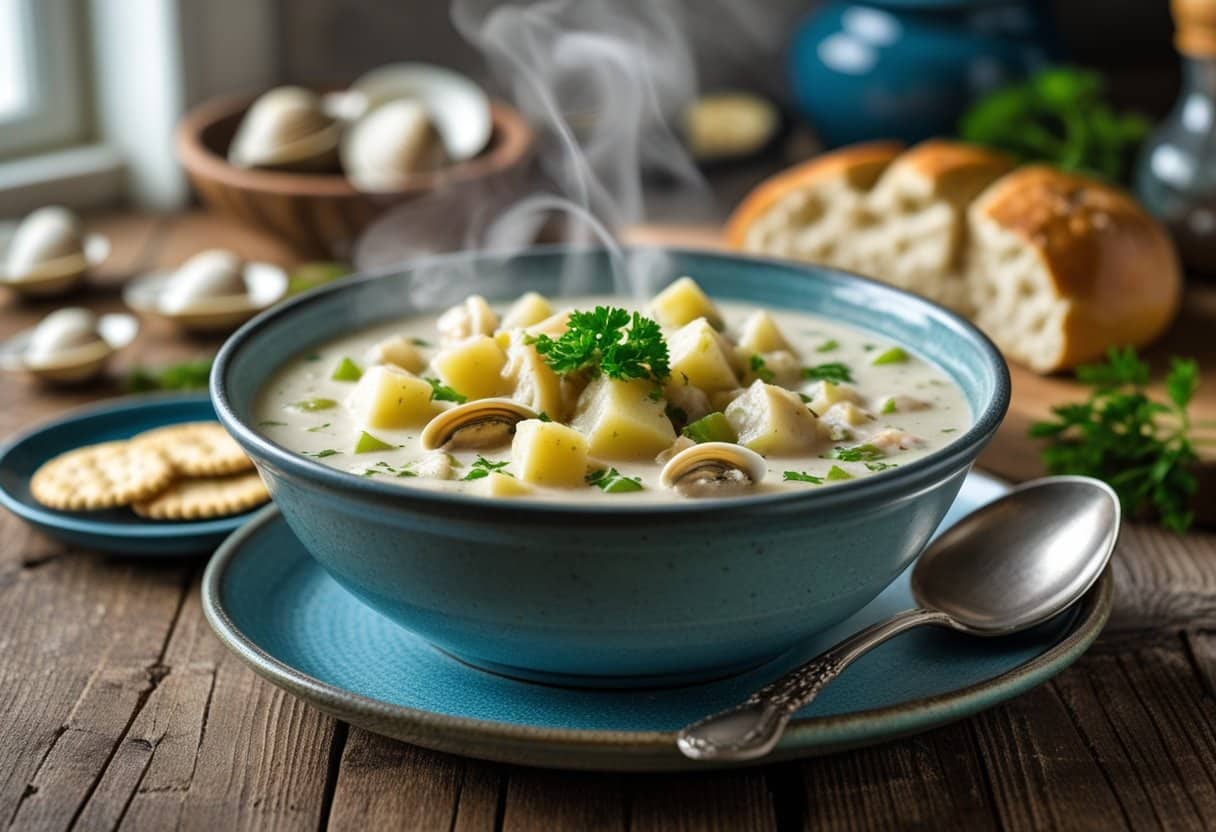
You don’t need fresh clams to whip up this dish at home, and it only takes about an hour to cook. The combo of smoky bacon, soft veggies, and creamy broth makes clam chowder a hit for dinners or casual lunches.
Whether you’re new to making chowder or searching for a trusty recipe, this guide will walk you through the key steps and tips. We’ll also toss in ideas for customizing your soup and fun serving suggestions.
Clam Chowder Recipe Essentials
To make a good clam chowder, let’s focus on a few crucial elements. Every ingredient plays a role in building the flavor, texture, and look of the final dish.
Choosing the right clams and potatoes, plus the proper dairy, shapes the chowder into a classic New England style or another regional favorite.
Key Ingredients and Their Roles
Clam chowder relies on staple ingredients that bring flavor and texture. Clams provide the main seafood taste that defines the soup.
Potatoes add body and soak up flavors while softening the broth. Onions and celery create the base aromatics, giving depth and balance.
Butter and flour team up to make a roux, which thickens the chowder and keeps it creamy without weighing it down. Clam juice or chicken broth helps cook the veggies and amps up the seafood flavor.
Seasonings like salt, pepper, and sometimes Old Bay or bay leaf boost the taste. Bacon or salt pork brings smoky notes, and garlic (used sparingly!) keeps things interesting without stealing the spotlight.
Half and half, cream, or milk add richness, but your choice will change the chowder’s creaminess and mouthfeel.
Best Types of Clams to Use
The best clams for chowder depend on what you can find and your recipe style. Fresh clams have amazing flavor but need cleaning and a little TLC.
Steaming fresh clams releases natural juices that add sweetness and saltiness. Canned clams are super convenient, especially minced clams with their juice—no shucking required.
Frozen clams are another option, just thaw them properly to keep the texture right. For New England chowder, small clams like cherrystone or littlenecks are perfect.
They’re tender and have a mild, briny flavor. Always add clams at the end of cooking to keep them from turning into rubber bands.
Choosing the Right Potatoes
Potatoes are the undercover heroes, thickening and shaping the chowder’s texture. Russets are popular because they break down and thicken the broth.
If you want your potatoes to keep their shape, Yukon Golds are firmer and still soak up plenty of flavor. Red potatoes work too if you like chunkier, waxier bites.
For Manhattan chowder, diced potatoes balance the tomato base. New England style usually means cubed potatoes cooked with celery and onions to soak up all that clammy goodness.
Creaminess: Milk, Cream, and Half and Half
How creamy do you want your chowder? Half and half is a crowd-pleaser, giving a rich but not-too-heavy texture.
Heavy cream brings the luxury, but it can turn the chowder into a full-on winter sweater for your tongue. Whole milk is lighter and makes a thinner—but still creamy—chowder.
Some folks mix milk and cream for the best of both worlds. If you’re avoiding dairy or just want to lighten things up, chicken broth or extra clam juice can sub in, but expect a different vibe.
Add your dairy slowly and whisk well to keep things silky and avoid any curdling drama.
Step-by-Step Clam Chowder Preparation
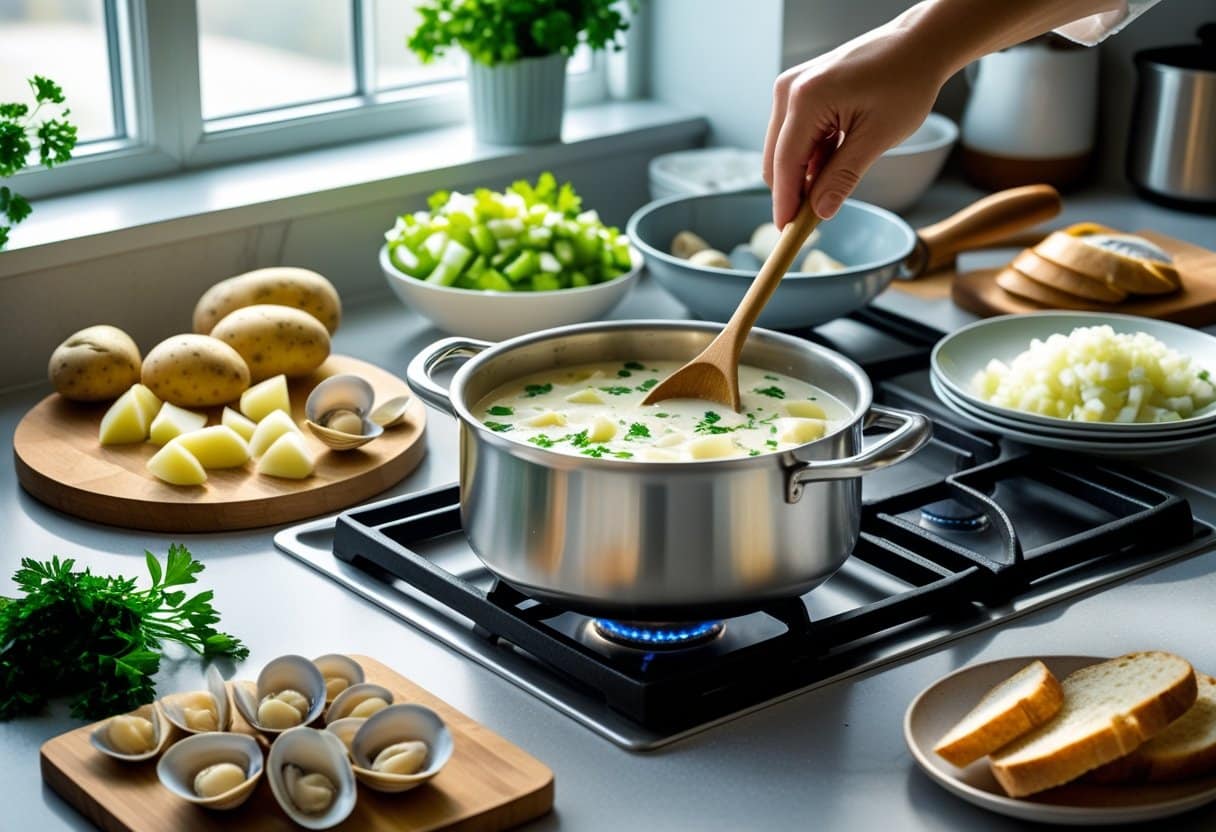
Clam chowder comes together with a little prep, a flavorful base, and a smooth, creamy finish. We’ll walk you through cooking the clams, building a rich foundation, thickening the chowder, and a few tips for serving and storing leftovers.
How to Prepare and Cook Clams
Start by steaming fresh clams for the best flavor and broth. Use little neck or cherry stone clams for a strong, fresh taste.
Rinse them well so you don’t get a surprise crunch of sand. Pop clams in a pot with a splash of water or white wine.
Cover and steam over medium heat until the shells open—usually about 5-10 minutes. Toss any stubborn, unopened clams.
Save the steaming liquid and strain it through a fine sieve (nobody wants sand in their soup). Pull the clam meat from the shells and chop it into bite-sized pieces.
Building the Base and Sautéing Vegetables
Fry up some thick-cut bacon until crispy, then set it aside but keep the glorious bacon fat in the pot. That fat is chowder gold.
Sauté yellow onions in the bacon fat until soft and translucent. Add a dab of butter for extra richness and cook minced garlic briefly—just enough to make your kitchen smell amazing.
Toss in diced potatoes and let them simmer in the clam broth. This helps them soak up flavor and stay tender.
Add milk or cream at this stage to start building that classic chowder texture.
Thickening and Combining Ingredients
To thicken things up, whisk flour into heavy cream to make a smooth slurry. Add it slowly to the simmering pot, stirring so you don’t end up with floury lumps.
The chowder is ready when it coats the back of a spoon. Stir in the chopped clams and most of the bacon, just warming the clams to keep them tender.
Season with salt and freshly ground black pepper, tasting as you go. For a little kick, try a few drops of Tabasco.
Finish with fresh parsley for a burst of color and brightness.
Tips for Serving and Storing Leftovers
Serve clam chowder in warm bowls or classic bread bowls for a hearty experience. Oyster crackers on the side add a crisp contrast.
If you have leftovers, cool the chowder quickly and pop it in the fridge. It will last 3 to 4 days.
Reheat gently on low heat to avoid curdling or breaking the cream. Stir often, and if it thickens up like a New England winter, add a splash of milk.
Avoid freezing chowder with cream, as it can get a little weird and grainy. Keep it creamy and delicious every time with these simple tricks.