Smoked salmon is a versatile and flavorful dish that many enjoy for its rich taste and delicate texture. Making smoked salmon at home may seem complex, but with the right technique and ingredients, it’s actually pretty straightforward.
We can create tender, smoky salmon by curing it in a simple brine. Drying it to develop a pellicle and gently hot smoking it to the perfect temperature gives us that irresistible result.

Using the right type of wood, controlling the smoker’s heat, and choosing quality salmon makes all the difference. Whether we use alder, apple, or maple wood, and pair it with a sweetener like maple syrup or honey, the process enhances the salmon’s natural flavor while keeping it moist and flaky.
In this post, we’ll guide you through the essential steps to prepare and smoke salmon successfully. From curing times to smoking temperatures, our approach helps us avoid common mistakes like dry salmon or a heavy layer of albumin.
For detailed tips, you can check out this smoked salmon recipe.
How to Prepare and Smoke Salmon
To make great smoked salmon, we need to start with the right salmon, prepare it carefully, and choose the best smoking setup. Each step affects the flavor and texture, from selecting the fillet to picking wood chips.
Proper seasoning and brining are also key to juicy, tasty results.
Choosing the Best Salmon Fillet
We want fresh, high-quality salmon for smoking. Wild-caught varieties like king salmon, sockeye salmon, or coho usually offer better flavor than farmed Atlantic salmon.
Look for a firm, bright pink or orange fillet with no strong fishy smell. A large salmon fillet (2 to 4 pounds) works well for smoking.
Fillets with the skin on protect the flesh and keep it moist during smoking. Avoid thin or tapered pieces like tail sections, as they can dry out faster.
Wet Brine vs Dry Brine Methods
Brining adds moisture and flavor before smoking. We can choose between wet brine and dry brine.
Wet brine uses a salt and sugar solution (usually with water), where the salmon soaks for several hours. This method adds moisture and seasons the fish evenly, but it takes longer and requires space in the fridge.
Dry brine involves rubbing the salmon with a mix of kosher salt, brown sugar, and sometimes pepper or herbs. It draws moisture out, firms up the flesh, and helps form a pellicle—a sticky surface that smoke loves to cling to.
Dry brining typically takes 8-12 hours and is easier for small kitchens. Both methods work, so pick your favorite brining adventure.
Dry Rubs and Seasoning Blends
For added flavor, we use dry rubs made of spices and herbs. A simple mix includes kosher salt, brown sugar, garlic powder, black pepper, and sometimes smoked paprika.
We can add a bit of maple syrup or olive oil to boost sweetness and help the rub stick. Sometimes, a light coat of Dijon mustard or olive oil before applying the rub helps the seasoning bind better.
Butter can be added after smoking to increase richness. Using dry rubs lets us customize flavor without overpowering the salmon’s natural taste.
Setting Up the Smoker and Wood Chip Selection
We like to keep the smoker temperature between 180°F and 225°F to avoid drying out the salmon. Preheat your electric smoker or Traeger smoker and soak your wood chips in water for 30 minutes to ensure slow, steady smoke.
Fruitwoods like applewood and cherry are excellent choices because they provide mild, sweet smoke. Place the salmon skin-side down on the grill grates.
Add wood chips in small amounts throughout the 3-4 hour smoke time to maintain steady smoke flow. Use a meat thermometer to check for an internal temperature of 140°F before removing the salmon.
This setup helps ensure even cooking and a deep smoky flavor.
Smoking Time, Temperature, and Serving Tips
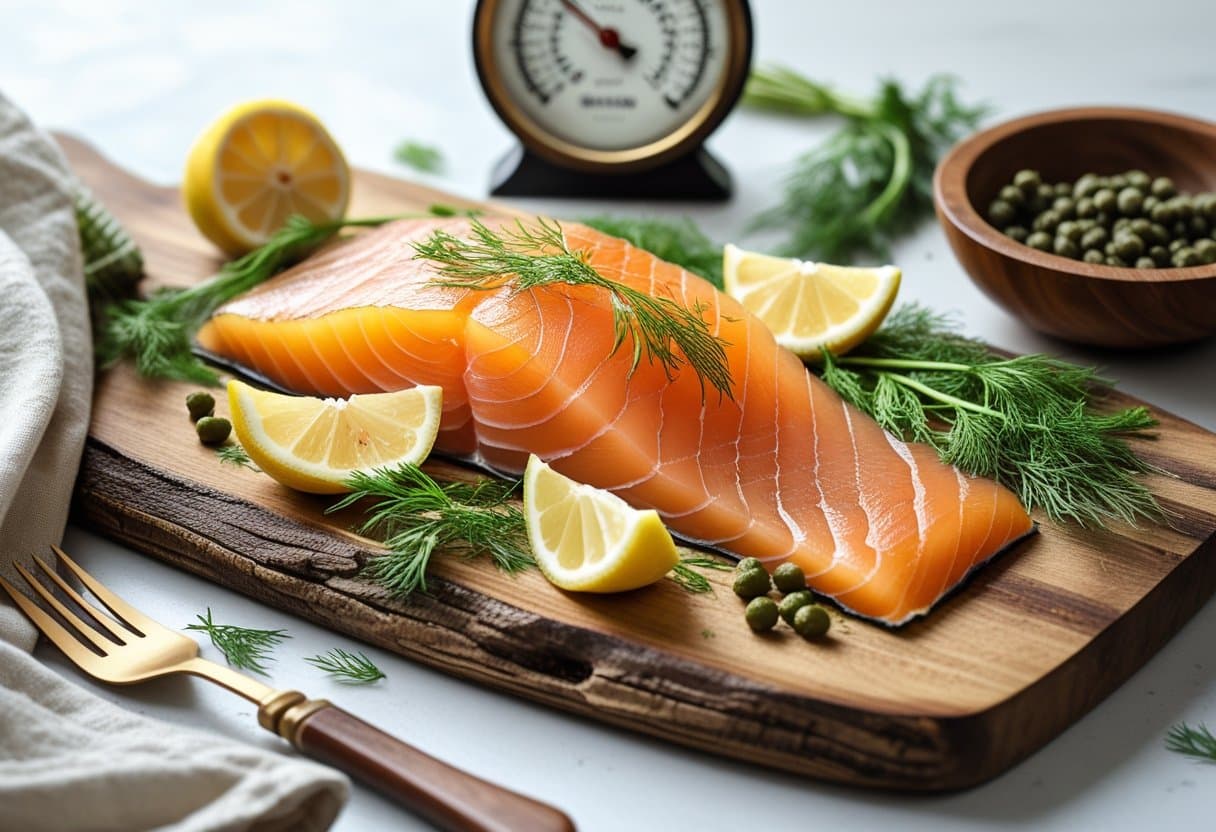
Smoking salmon requires careful attention to temperature and timing to get the right texture and flavor. Using the correct tools to monitor doneness and knowing how to serve and store the fish helps us enjoy it safely and deliciously.
Internal Temperature and Meat Thermometer Use
The key to safe and tasty smoked salmon is reaching the proper internal temperature. For hot smoked salmon, we want the fish to hit 145°F (63°C) for at least 30 seconds.
This ensures it’s fully cooked and kills harmful bacteria like Listeria. Using a reliable meat thermometer with a probe is essential.
We insert it into the thickest part of the fillet for an accurate reading. It helps us avoid overcooking, which dries the salmon, or undercooking, which risks food safety.
Cold smoking does not cook the fish, so internal temperature isn’t a factor there. For cold smoking, hygiene and proper curing are critical—don’t let your salmon go rogue.
How Long to Smoke Salmon
Smoking time varies mainly by the method and smoker temperature. For hot smoking, the process usually takes 2 to 6 hours at temperatures between 120°F and 180°F (49°C to 82°C).
Thicker fillets require more time. We start on the lower end and monitor often.
Cold smoked salmon takes longer, typically 12 to 24 hours at 68°F–86°F (20°C to 30°C). This slow process infuses flavor without cooking, so it requires patience and a well-controlled smoker.
Monitoring the smoker’s temperature regularly is important to keep it within range. Salmon doesn’t like surprises—keep it cozy.
Hot Smoked Salmon vs Cold Smoked Salmon
Hot smoked salmon is cooked during smoking. It flakes easily, looks opaque, and has a firm texture.
The temperature range is higher, with the salmon internally reaching 145°F. This method is safer for home cooks because it fully cooks the fish.
Cold smoked salmon is not cooked but cured. It remains translucent and silky, often used for lox.
Smoking happens at lower temperatures. Since the fish isn’t cooked, cold smoking requires strict curing, hygiene, and refrigeration to prevent bacteria growth.
We choose the method depending on texture and flavor preferences. Either way, you’re in for a treat!
Serving Ideas and Storing Leftovers
We enjoy hot smoked salmon warm or chilled. It pairs well with simple sides like bagels, cream cheese, and capers.
Cold smoked salmon is perfect for appetizers. Try it as a topping for salads or scrambled eggs.
Store smoked salmon tightly wrapped or vacuum-sealed in the fridge for up to two weeks. For longer storage, freeze it in airtight bags for up to three months.
Always thaw frozen salmon slowly in the fridge to keep it tasting its best. No one likes rubbery salmon, after all.
Keep an eye on internal temperatures and smoking times for top-notch results and safety.
For more tips, check out the smoked salmon temperature chart and instructions.