If you’ve ever wondered how to make baba ganoush, I’ve got a simple and tasty recipe that brings out the best in this classic Middle Eastern dip. Baba ghanoush is a smoky eggplant dip that’s creamy, flavorful, and perfect as a snack or appetizer.
The secret to great baba ghanoush is roasting the eggplant to get that rich, smoky taste before blending it with tahini, garlic, lemon, and olive oil.
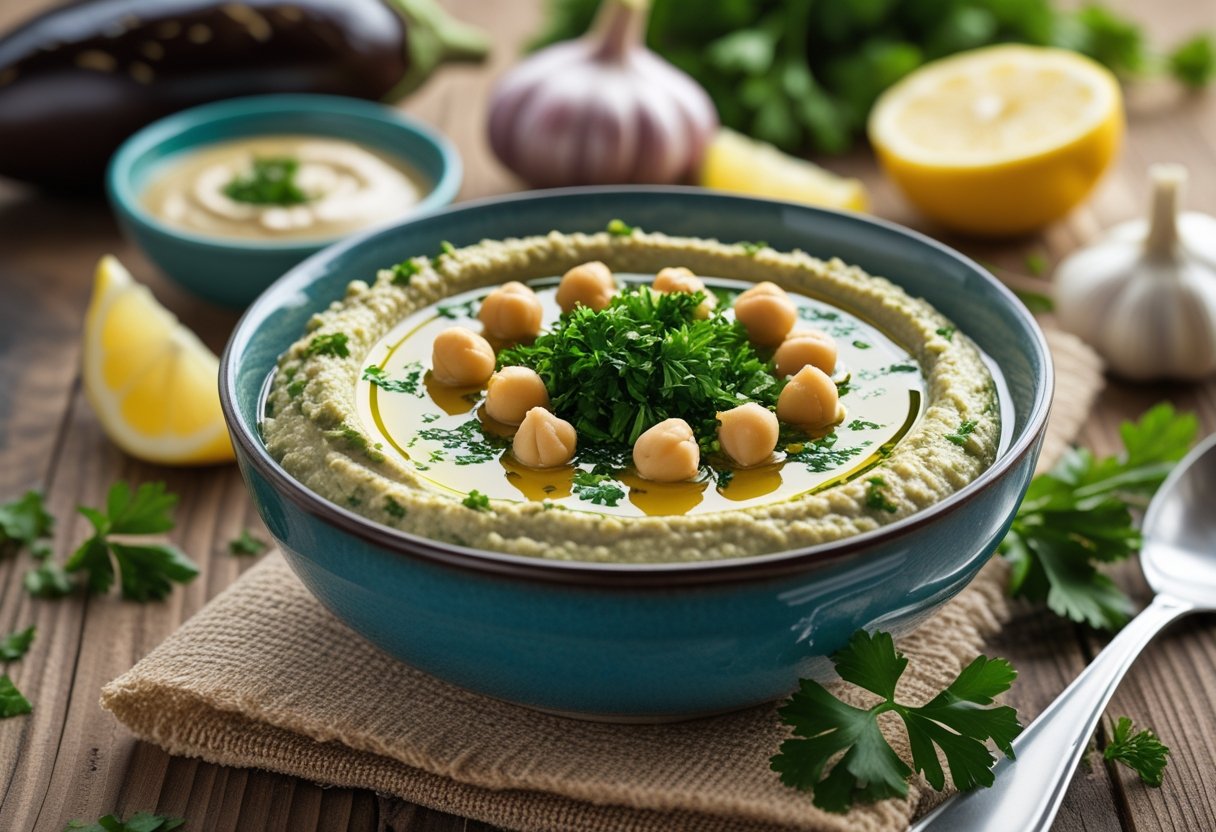
I love how easy it is to make baba ghanoush at home without needing fancy ingredients. Whether you call it baba ghanouj, baba ghanoush, or baba ganoush, this eggplant dip is a crowd-pleaser that you can enjoy with pita bread, veggies, or crackers.
I’ll walk you through everything you need to know to make this classic dip just right.
Ingredients and Flavor Foundations
Baba ghanoush is all about balancing rich, creamy textures with fresh and smoky flavors. The right eggplant sets the base, while tahini and garlic bring depth.
Lemon juice and spices add brightness and a little kick. Each part plays a key role in making the dip taste just right.
Essential Ingredients Overview
At the heart of baba ghanoush is the eggplant, which gives the dip its creamy and smoky body. I always use Italian eggplants because they have firm flesh and roast well.
Olive oil is important too, adding smoothness and a subtle fruity note. Tahini, made from ground sesame seeds, gives baba ghanoush its nutty richness.
Fresh lemon juice brightens the taste and cuts through the creaminess. Garlic adds a warm, pungent layer.
I also like to include chopped parsley for a fresh, herbal touch. Simple spices like cumin or smoked paprika can add warmth or a smoky edge, enhancing the flavors without overpowering them.
Role of Tahini and Sesame Seeds
Tahini is made by grinding sesame seeds into a smooth, creamy paste. It gives baba ghanoush a nutty flavor that’s both rich and slightly bitter.
The tahini blends beautifully with the soft eggplant to create a silky texture. The quality of tahini matters, so I look for one that’s smooth with a fresh sesame taste.
You can buy it or make it at home if you prefer. A little goes a long way, so I usually start with about a quarter cup.
If you don’t have tahini, alternatives like almond or cashew butter work in a pinch, but the classic sesame flavor is really what makes baba ghanoush stand out.
Supporting Flavors: Garlic, Lemon Juice, and Spices
Garlic is a key player for me. I usually use raw minced garlic to keep its sharpness, but sometimes I roast it first for a milder, sweeter flavor.
Both options add that signature punch that balances the creaminess. Fresh lemon juice gives baba ghanoush a bright, tangy lift.
It lightens the dish and prevents it from tasting too heavy. I often zest a bit of lemon peel to add a fresh aroma on top.
Spices like ground cumin or smoked paprika deepen the flavor, while a pinch of red pepper flakes adds gentle heat. A small handful of chopped parsley brings freshness and color, making the dip look as good as it tastes.
Choosing the Best Eggplants
Picking the right eggplant is important because it’s the main ingredient. I prefer firm, unblemished Italian eggplants, sometimes called aubergines, because they have thick, creamy flesh.
China or Japanese eggplants are good for slicing evenly, but Italian eggplants give a better smoky flavor when roasted whole. I make sure to prick them with a fork so they cook evenly in the oven.
Once roasted, the skin peels off easily, leaving soft, smoky flesh that forms the creamy base of baba ghanoush. Avoid eggplants with soft spots or bruises because they can taste bitter or mushy.
For the best smoky flavor, roasting on the grill or in the oven until tender is key.
Step-by-Step Baba Ghanoush Preparation
Making baba ghanoush means working with roasted eggplant to get that perfect smoky flavor. It’s about turning soft eggplant flesh into a creamy dip, then adding the right seasonings to bring out bold, balanced taste.
Roasting Eggplant for Smokiness
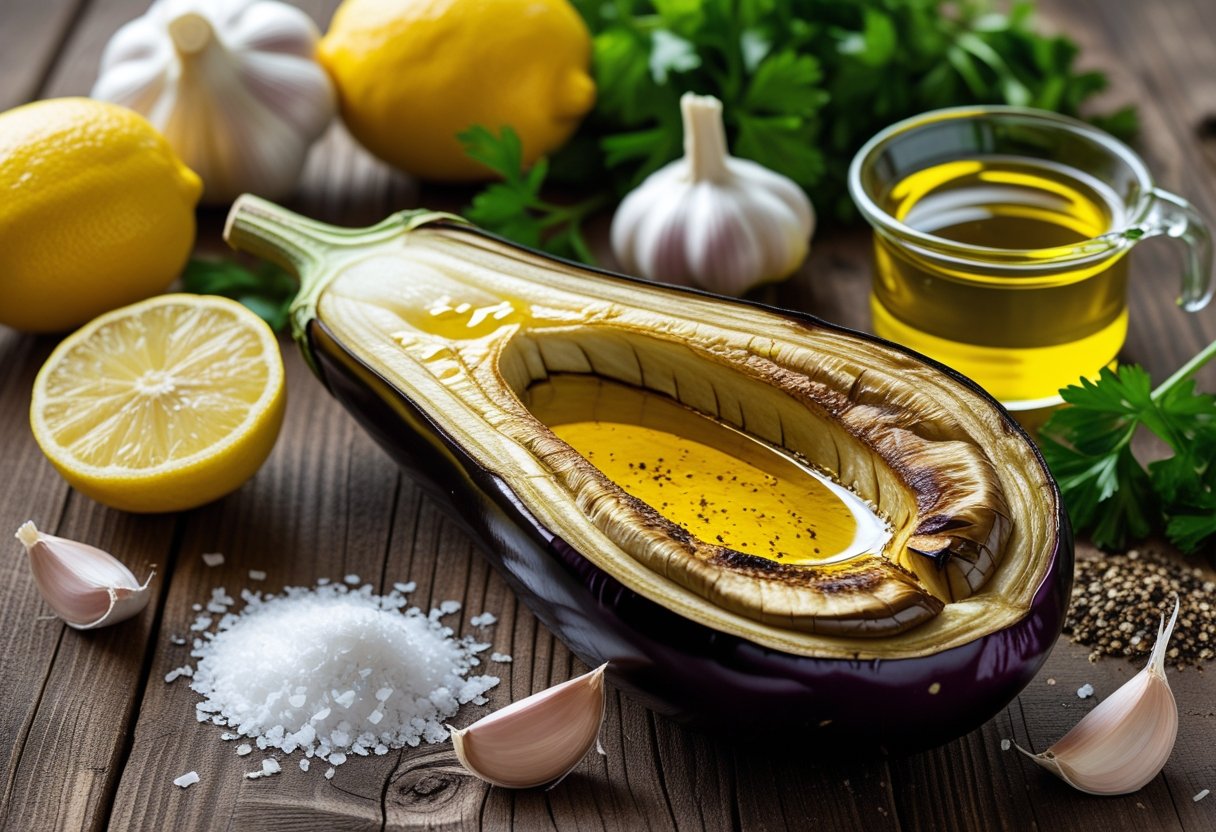
Roasting the eggplant is the heart of this recipe, and getting it right means serious smoky flavor. I start by washing the eggplants and poking them with a fork a few times to stop them from bursting.
Then I roast them whole at 425°F (220°C) for 40-50 minutes, turning every 10-15 minutes until the skin chars and the flesh feels very soft. That charred skin is where the smoky taste comes from, so I make sure the eggplants get nicely blackened on all sides.
If you have a grill, roasting over an open flame gives an even stronger smoky flavor. Once done, I let them cool for 15-20 minutes before peeling off the skin, leaving only the soft, smoky flesh.
Mashing or Blending to Desired Texture
After peeling, I scoop the eggplant flesh into a bowl and drain any extra moisture. This step helps avoid a watery baba ghanoush.
Now, I decide how smooth I want the dip to be. For a rustic feel, I mash the flesh with a fork or potato masher, leaving some small chunks.
If I’m aiming for a creamier dip, I use a food processor but stop short of completely pureeing it. Keeping a little texture makes it feel homemade and gives a nice bite.
Either way, the focus is on a soft, fluffy consistency that’s easy to scoop with pita or veggies.
Blending and Seasoning the Dip
Next, I add in the flavor boosters. Tahini gives the dip its rich nuttiness, while minced garlic adds an essential sharp bite.
I mix in fresh lemon juice for tanginess and a good drizzle of olive oil for smoothness. I like to add ground cumin and a pinch of smoked paprika to lift the smoky depth, though paprika is optional.
Salt and black pepper are key to balance everything out. I stir everything well and taste to adjust the lemon or salt as needed.
Finally, I fold in chopped parsley for a fresh note and sometimes a spoonful of plain yogurt if I want extra creaminess.
You can find a detailed step guide for making authentic baba ghanoush with tips on roasting and seasoning at Jessica’s kitchen here.